London in paintings: Capital canvases by upcoming artists and past greats
Our amazing capital city captured in striking colours, forms and perspectives by the likes of Monet, Turner, Whistler and dazzling depictions by talented contemporary artists.
From iconic landmarks like Waterloo Bridge to abstract and disparate city features in little-known backstreets, London’s fascinating landscapes have inspired artists all over the world, across the centuries, We bring you 8 artists painting London, starting with two amazing upcoming artists working in oils.
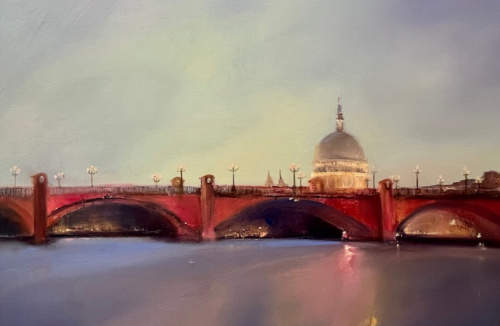
EVENING LIGHT, TOWER BRIDGE – Suchi Chidambaram
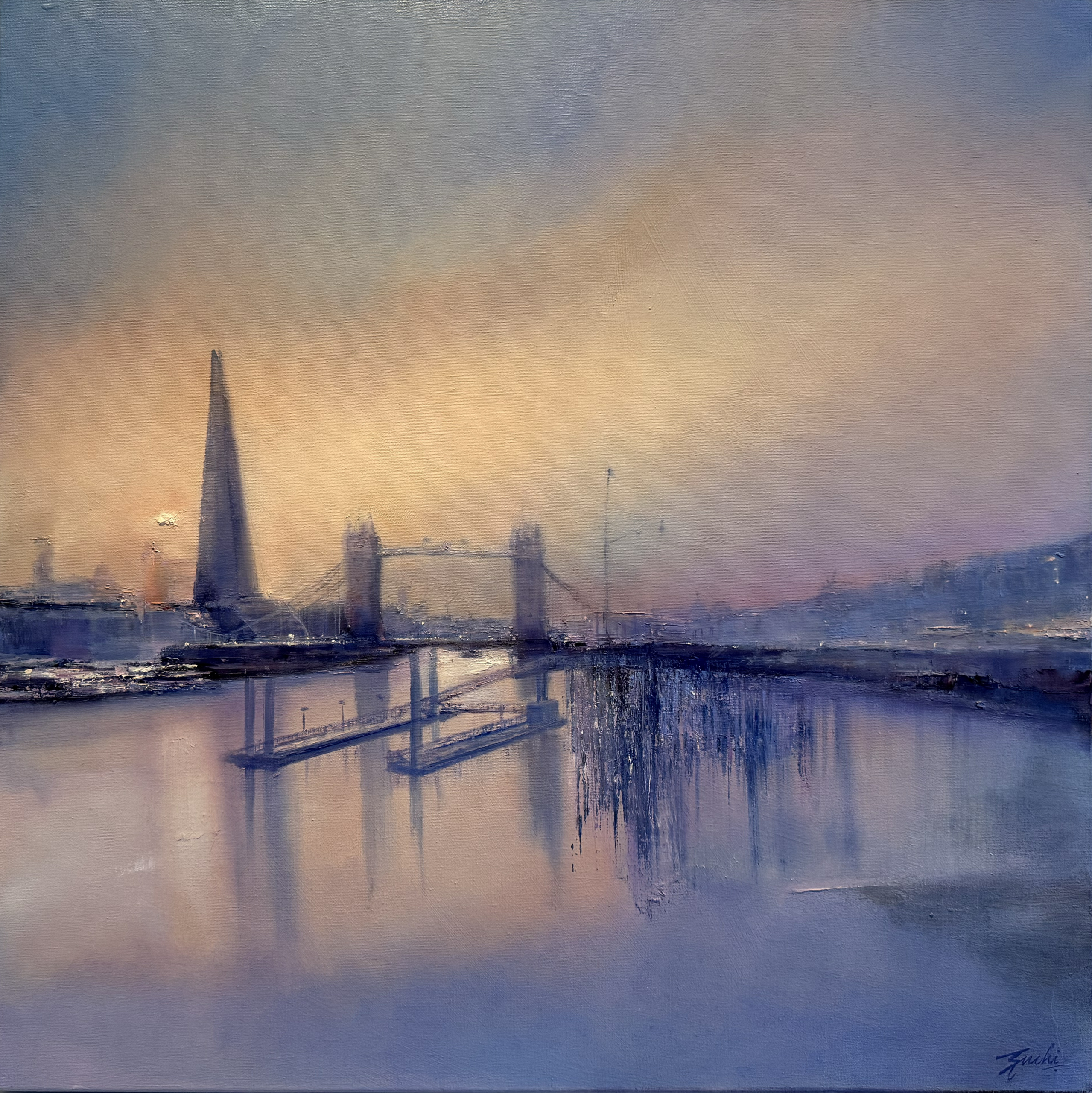
Evening Light, Tower Bridge (oil on canvas)
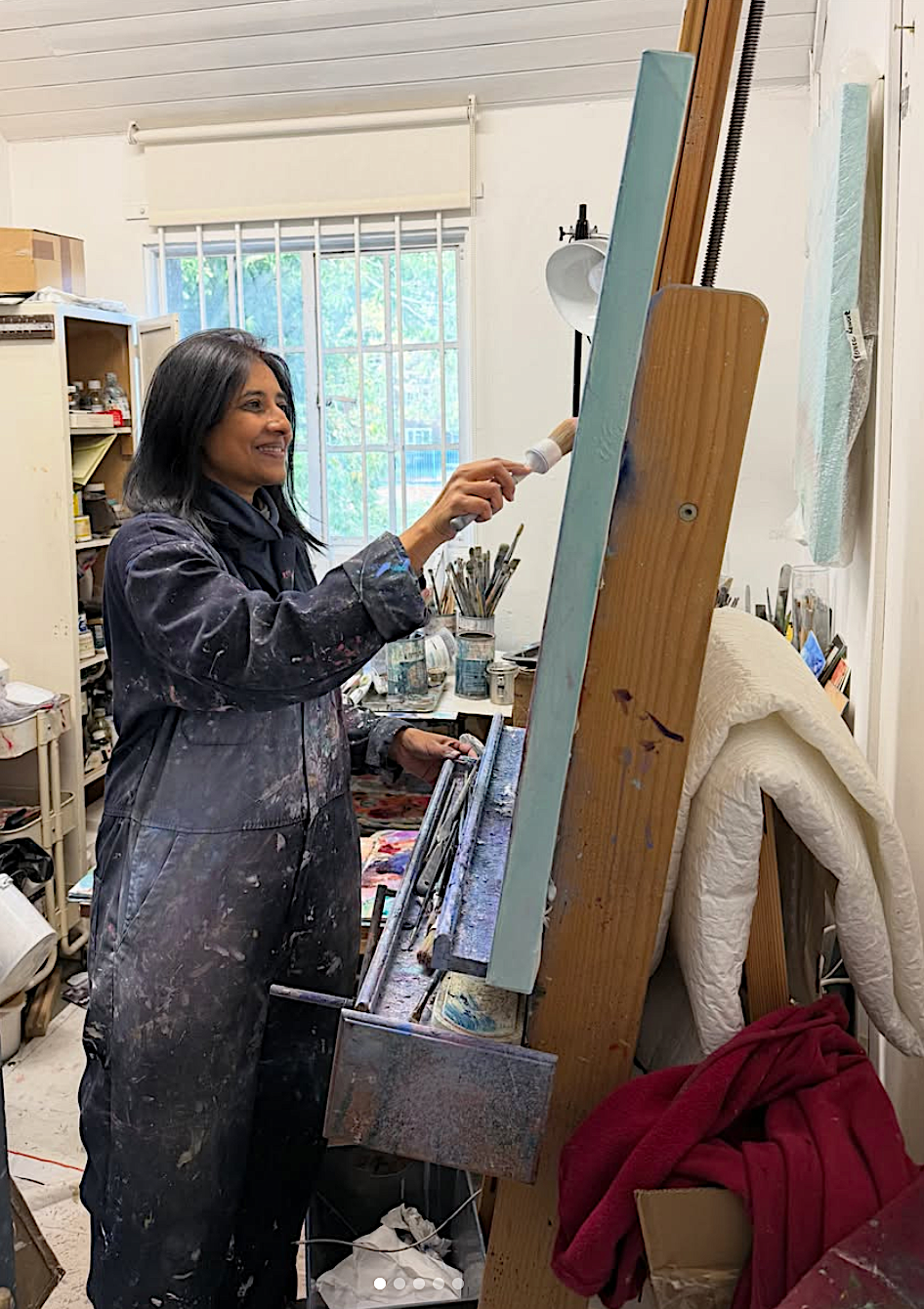
Suchi Chidambaram
London-based artist Suchi Chidambaram’s abstract landscapes capture the capital’s landmarks and riverways in stirring colour harmonies. Her striking portfolio of canvases depicting the River Thames, Hammersmith Bridge, Tower Bridge and such like show an enduring fascination with her home city. Evening Light, Tower Bridge (oil on canvas) is one of seven paintings to be displayed at the upcoming Art For Youth exhibition, Mall Galleries, 3-6 November 2026. Art for Youth London was established in 1988 as a platform for emerging artists and a fundraising exhibition in support of the UK charity, UK Youth. 2026 marks the 38th anniversary of this annual art exhibition, which has raised over £2.8 million to date, to support a network of over 8,000 youth organisations and national partners, collectively reaching 5.3 million young people, many of whom are living in deprived areas or facing huge personal barriers.
Suchi says: “When Tower Bridge and the great metropolis are bathed in soft evening light, the city’s frantic energy dissolves into a serene calmness. To capture this atmosphere, I use thin washes of oils and a palette knife to build up rich, textured layers that gradually reveal themselves. By balancing warm and cool mixtures, I seek a quiet harmony within the shifting colours. London is a theme that never ceases to inspire me. The changing light over this great city always makes it feel as though I am seeing it for the very first time, translating the fleeting beauty of urban stillness into an enduring visual experience.”
ICARUS IN THE CITY – Latifah A
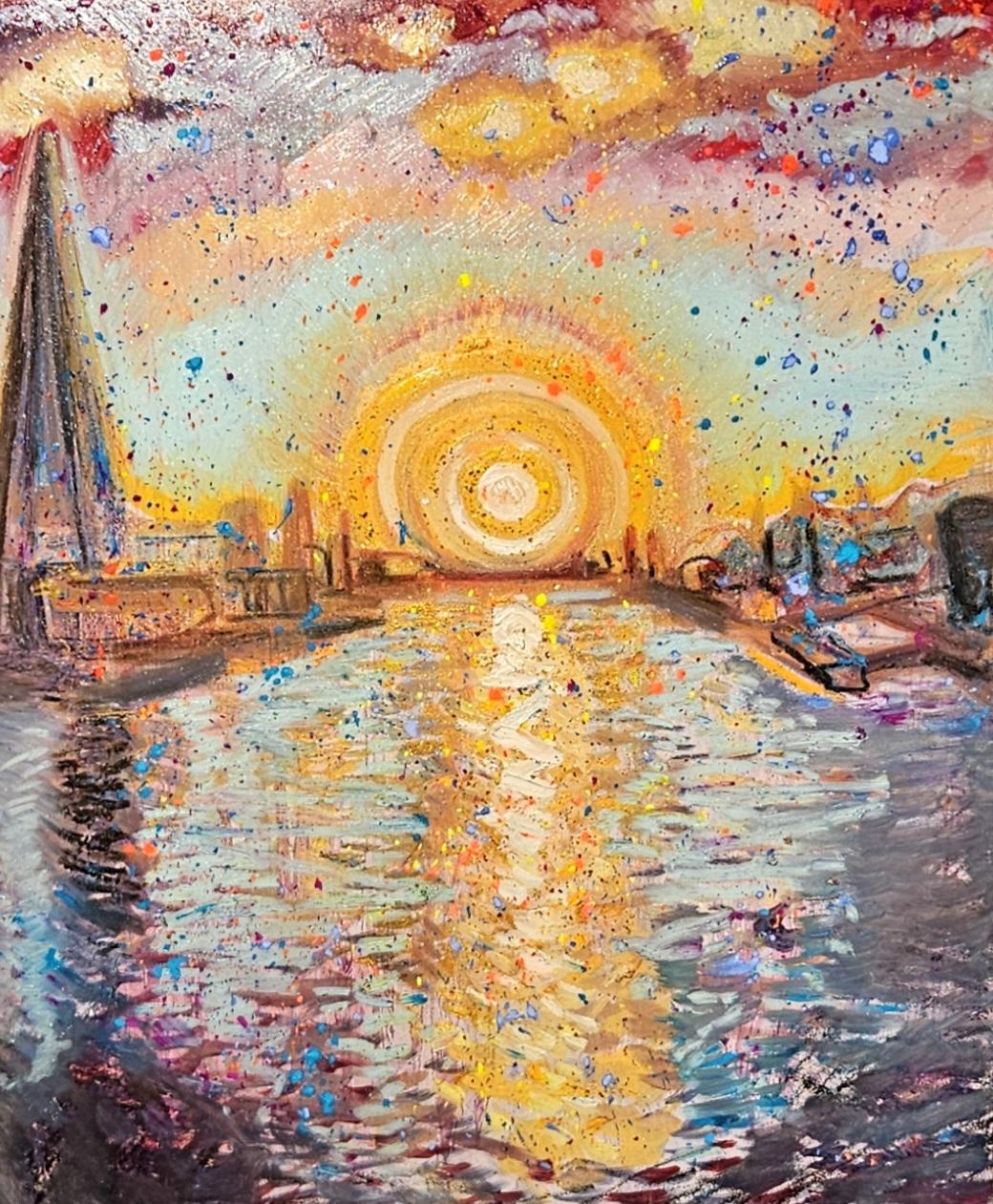
Icarus in the City (oil on canvas)

Latifah A
Latifah’s vibrant, colourful, contemplative works are inspired by memory, belonging and her own cultural hybridity. Based in the capital, she absorbs its scenic nuances, suffusing them into her ongoing survey of the divine feminine, mythology and the sublime. She has fond recollections of the walk along the riverside and Southbank depicted in the painting and says: “The painting was inspired by the setting sun over the River Thames. It’s a place that I often visit as I really love that part of London. The view is spectacular and iconic with the Shard in the background. While painting, I was thinking about sunrises, sunsets, and the way the sun is reflected in the water and I wanted to evoke that texture using impasto paint to express the light hitting the water. In the painting, there’s a hint of something atmospheric in the sky, which I show with radiating orbs of sunshine. Monet, Whistler, all the artists who have painted the river have inspired me over the years. It’s a place where I see something new to appreciate and admire every time I return, I guess because the landscape changes over the years. ”
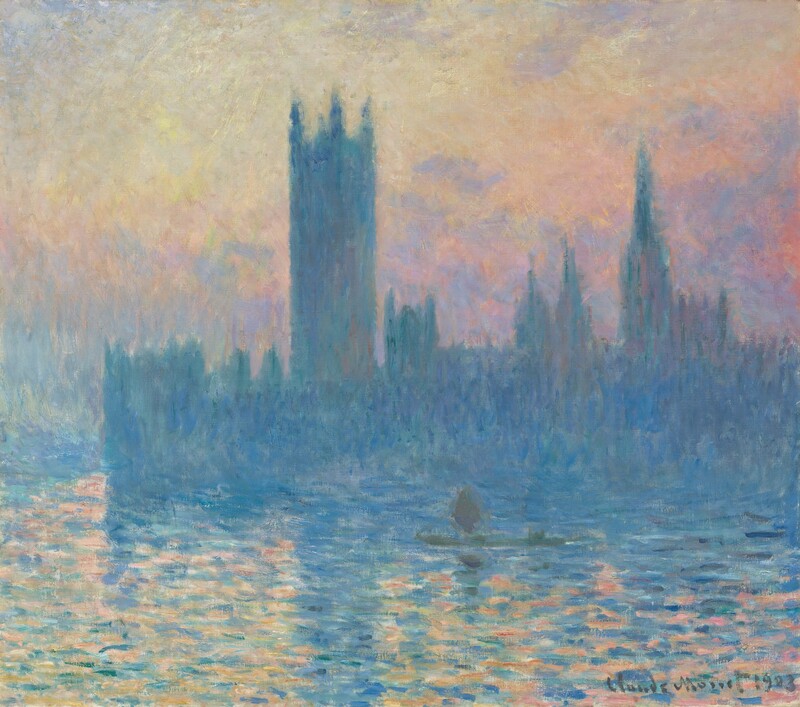
CLAUDE MONET – Waterloo Bridge, 1903, Houses of Parliament, 1903 and The Thames Below Westminster, 1871
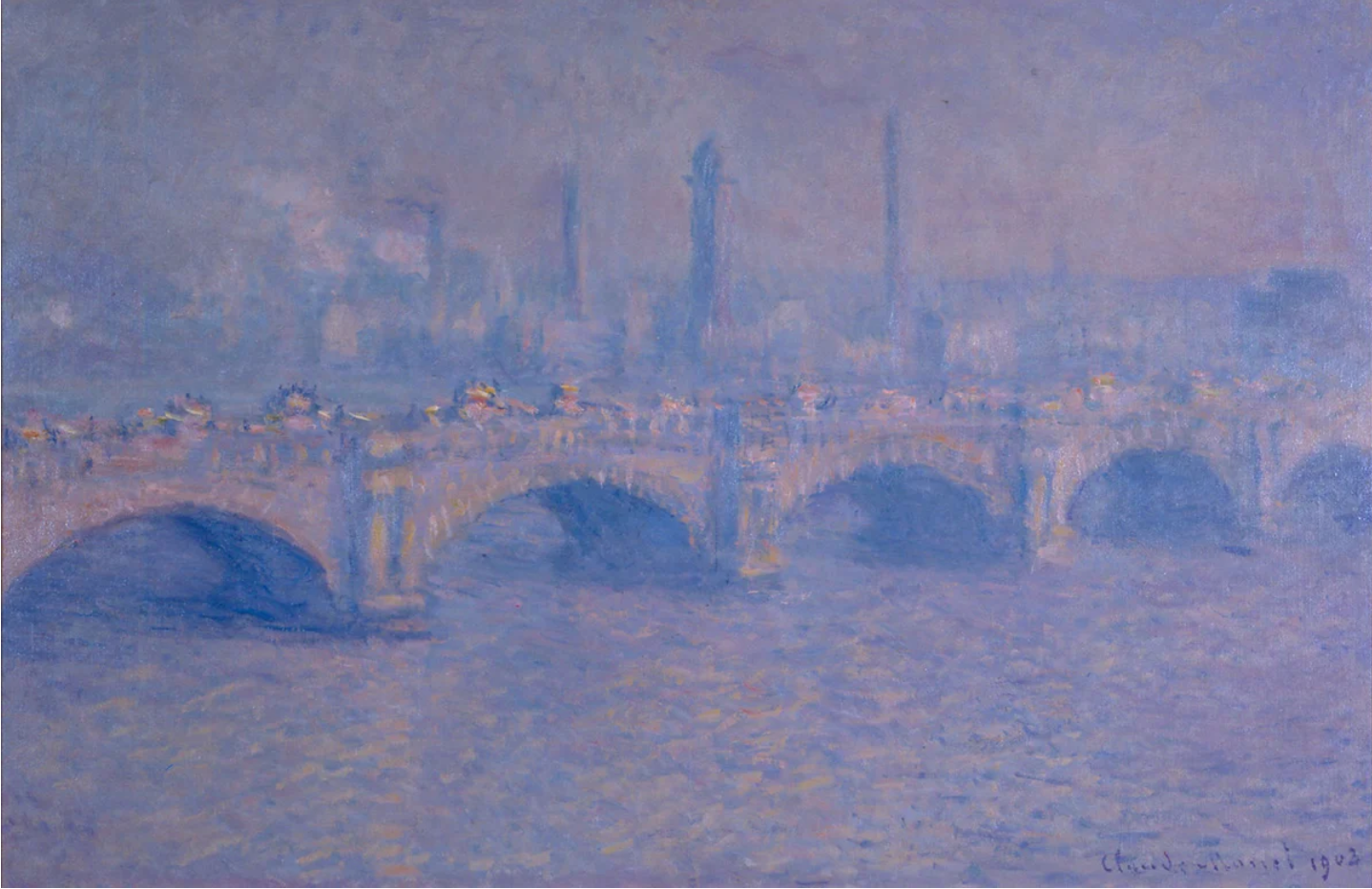
Waterloo Bridge, 1903
Houses of Parliament 1903
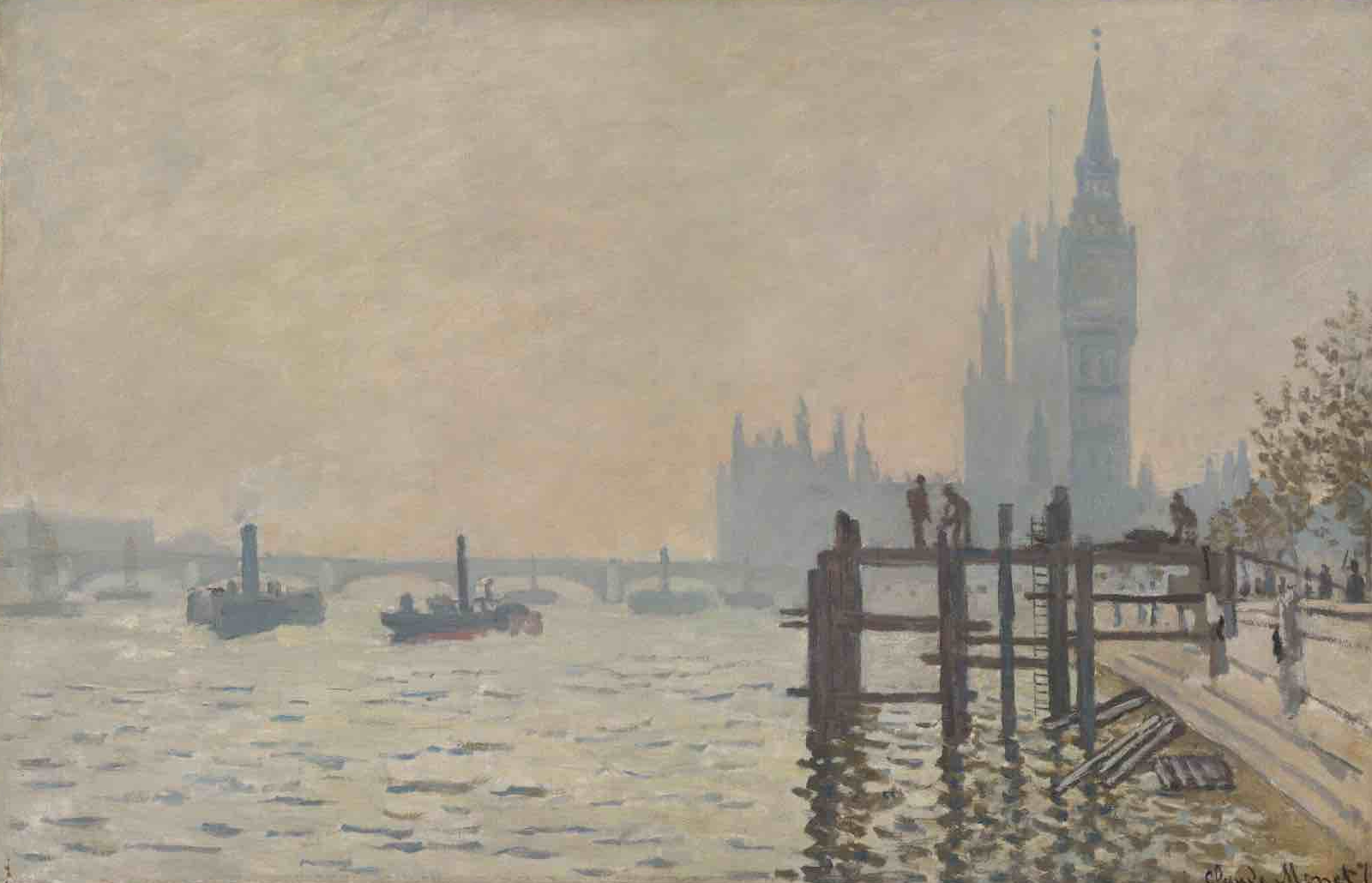
The Thames Below Westminster, 1871
Monet described his first visit to London as a miserable experience. But it obviously grew on him, the history books show he just couldn’t get enough of our capital city, creating over 100 paintings in his inimitable Impressionist style. His vibrant yet hazy depictions of Waterloo Bridge, Charing Cross Bridge, and the Houses of Parliament, actually flatter a city swallowed up by the Victorian smog spewing from smoky factories. But Monet actually liked the fog-smog!
‘Without the fog, London would not be a beautiful city. It’s the fog that gives it its magnificent breadth.” – Claude Monet.
JOSEPH M. TURNER- London from Greenwich Park, 1809
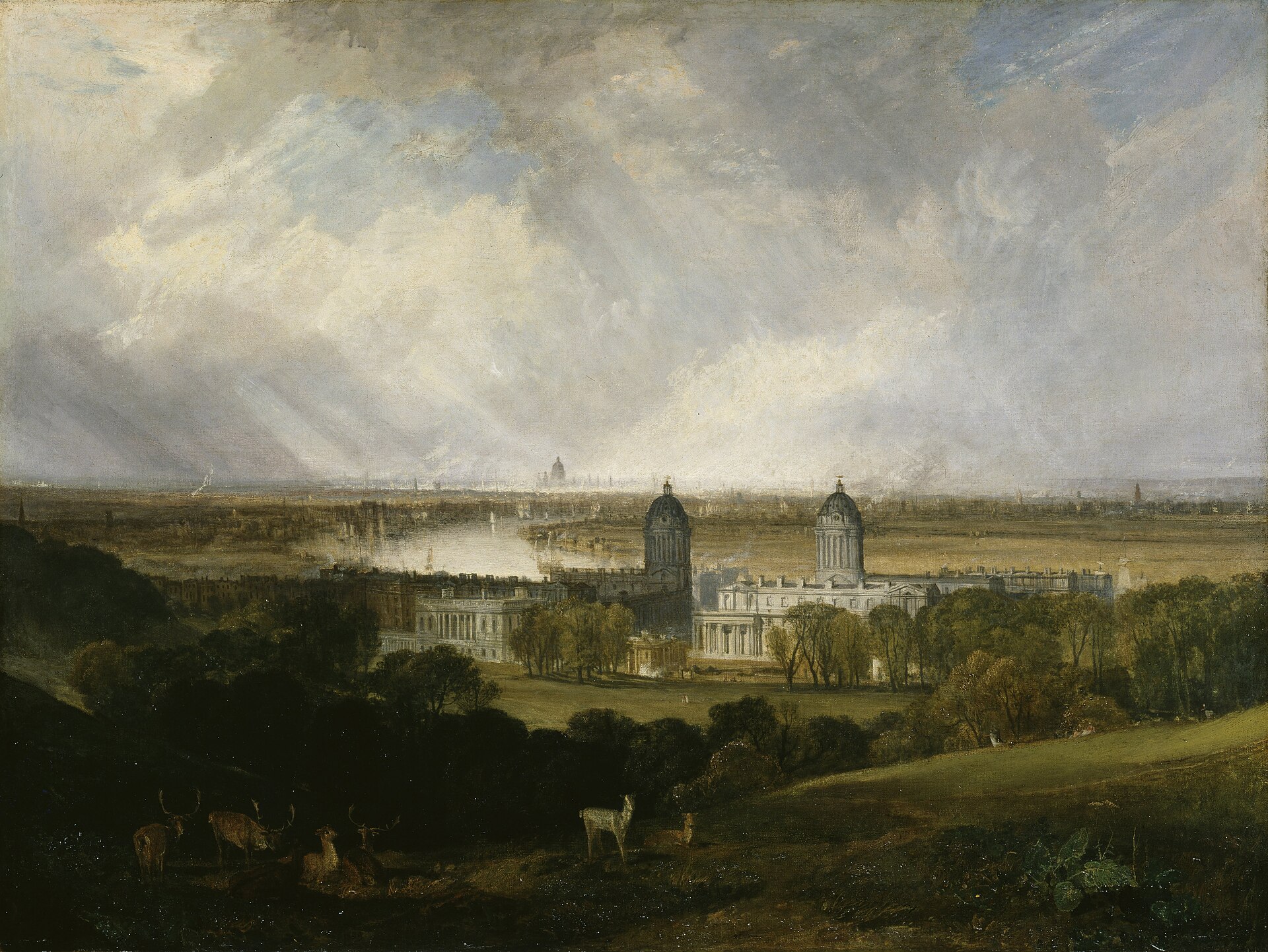
London from Greenwich Park, 1809
Turner’s dark, moody vision of Greenwich Park brings to mind the Dionysian depths of his famous seascapes. You expect a summery park scene looking down from One Tree Hill in Greenwich Park, certainly a lighter brighter Apolline look. But what you have here is visceral, emotive Romanticism with heavy brushstrokes and darker colours. From 1750-1850, Romanticism vied with Neoclassicism as the dominant art form but they were essentially opposites. Turner’s Romanticism was about honest creative expression while Neoclassicism focused on pretty details and lofty historical and religious themes.
JAMES MC’NEIL WHISTLER – Nocturne In Blue And Gold Old Battersea Bridge, 1872-75
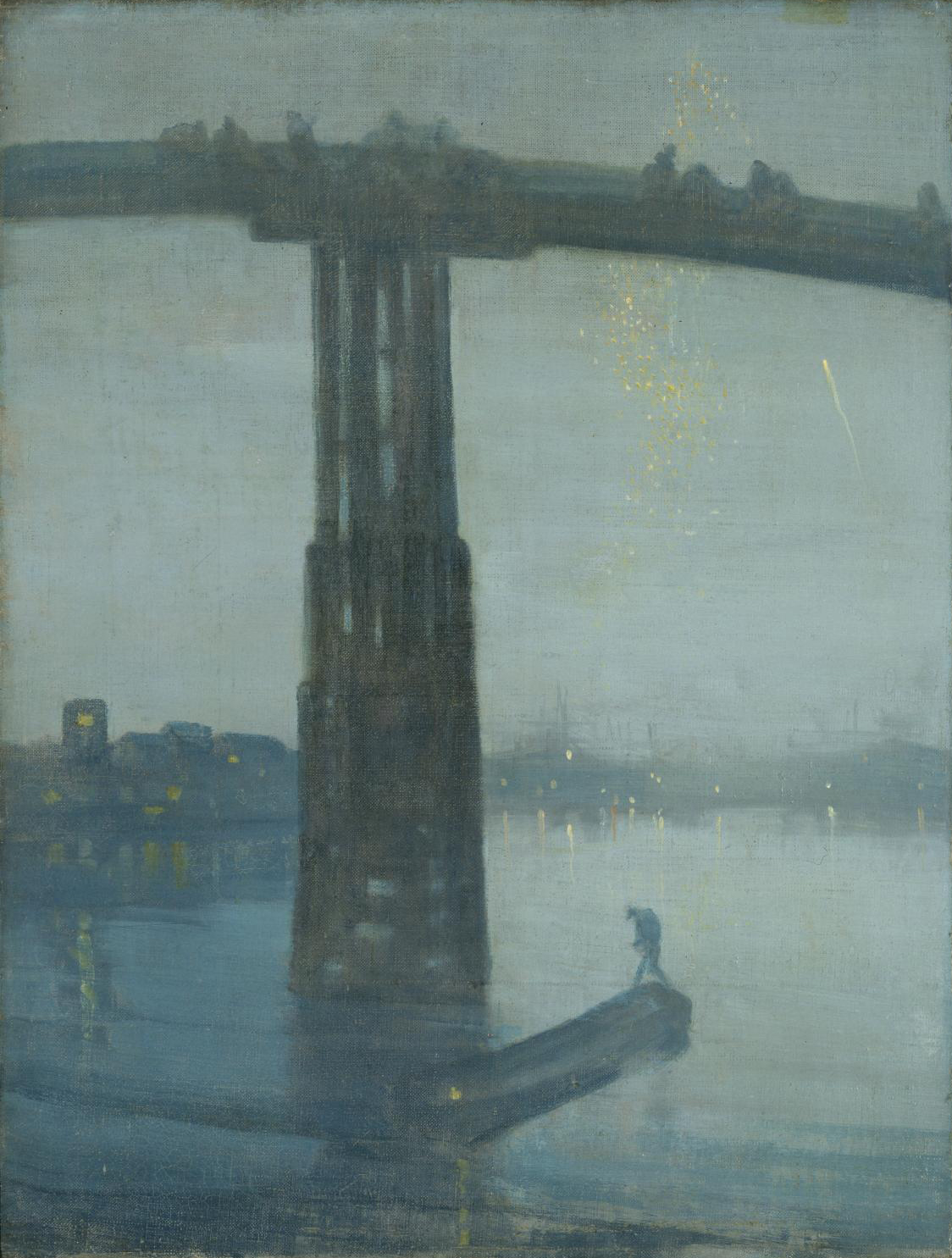
Nocturne: Blue and Gold – Old Battersea Bridge 1872-5
American-born artist James McNeil Whistler saw musical connotations in his works and regarded them as symphonies, even giving them musical titles. This artwork depicting the Thames at night made Victorian art critics tremble for several reasons. Firstly, they had to watch their words after the touchy artist successfully sued leading art critic John Ruskin for libel after his scathing review of the painting. Indeed, the canvas was even presented as evidence at the trial. Celebrated playwright and wit Oscar Wilde wasn’t much taken with this love ‘em or hate ‘em Nocturne series of paintings either and was vocal about it, but faced no legal threats. Was the American-born Whistler a naturalised London cockney after relocating to the capital in 1859 and dying here in 1903? Ruskin clearly thought so.
““I have seen, and heard much of Cockney impudence before now, but never expected to hear a coxcomb ask 200 guineas for flinging a pot of paint in the public’s face.” – John Ruskin’s scathing criticism of Nocturne in Blue.
PIET MONDRIAN – Trafalgar Square, 1939–1943
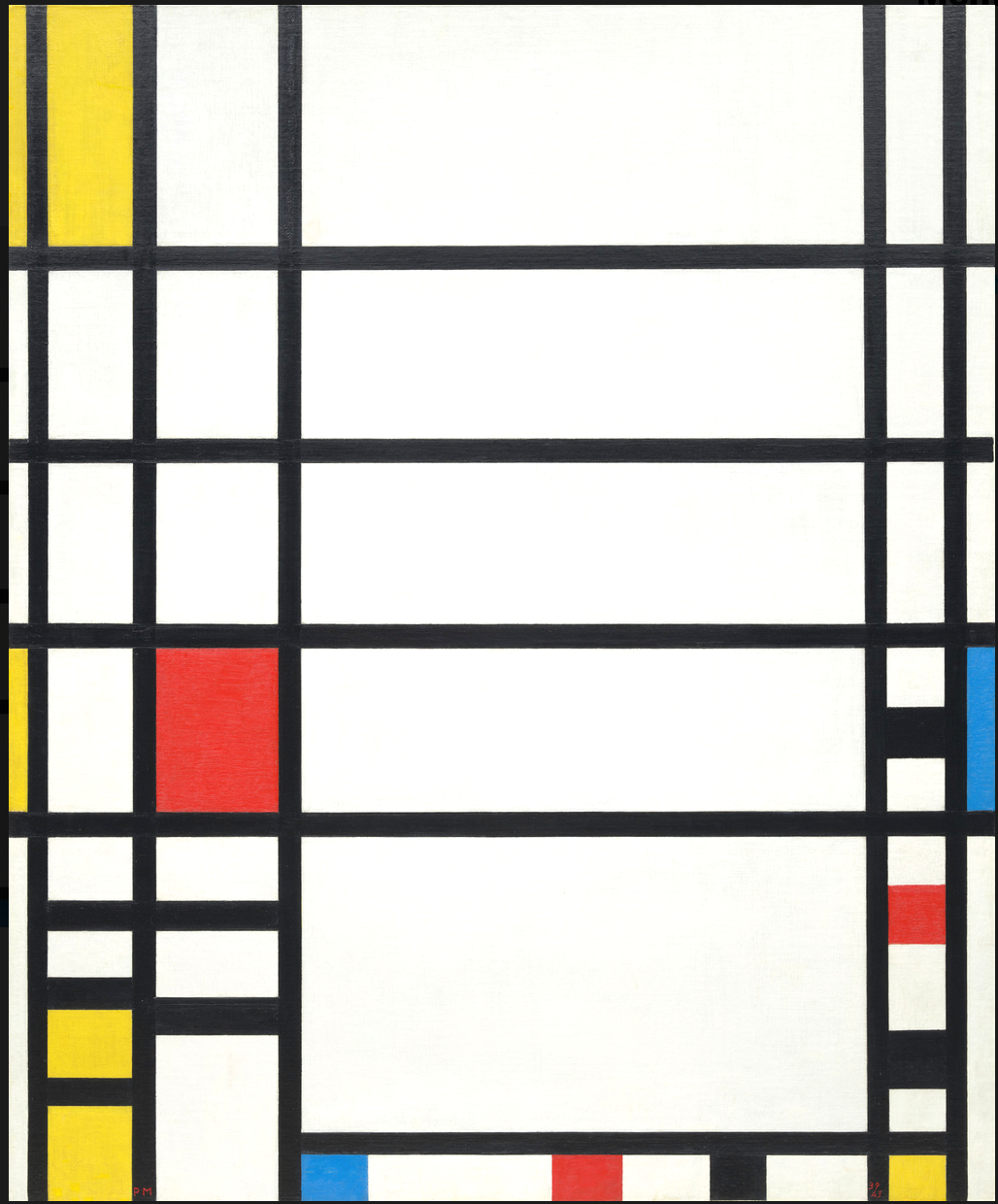
Trafalgar Square (1939–1943)
Do you think this painting looks like Trafalgar Square? Certainly, there are lots of squares! Celebrated Dutch abstract artist Piet Mondriam was a leading figure in the Neo-Plasticism movement pushing art boundaries and pursuing wholly abstract depictions of reality. His geometric, blocky works made great play of dismantling representational art. The artist fled to London at the onset of World War Two. His name was on a Nazi hit-list drawn up to punish artists creating what Adolph Hitler regarded as degenerative works. Hitler, a failed professional artist who perhaps had dark memories of starving on the streets of Austria while trying to sell his own work, may have been more than a little jealous of this successful upstart getting all the attention and taking on the art establishment. So when the Fuhrer curated an exhibition of degenerative works with Mondrian pride of place, the artist saw this as the time to flee for his life. He set up in Camden, North London, repainting his studio wall-to-wall in the primary colour geometric style of his canvases.
ANDRE DERAIN – Charing Cross Bridge, 1905, and London Bridge, 1905
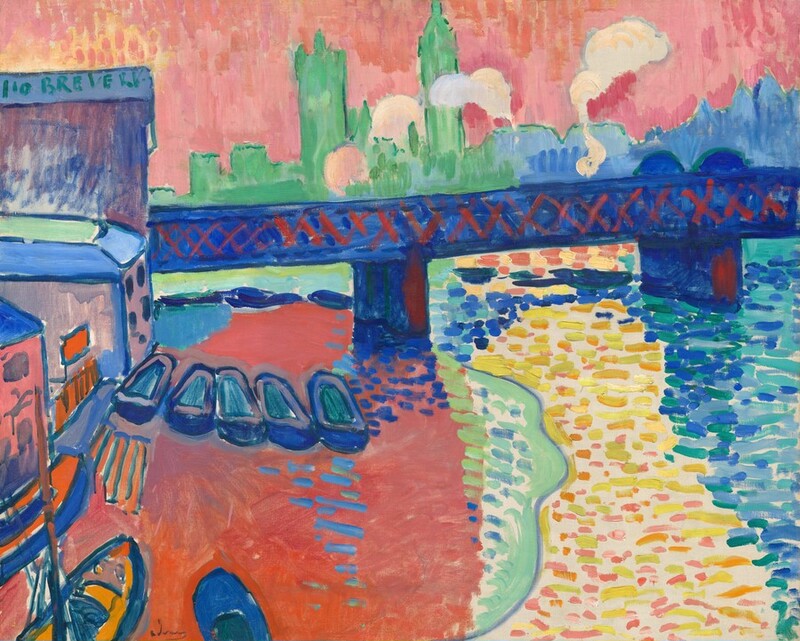
Charing Cross Bridge, 1905
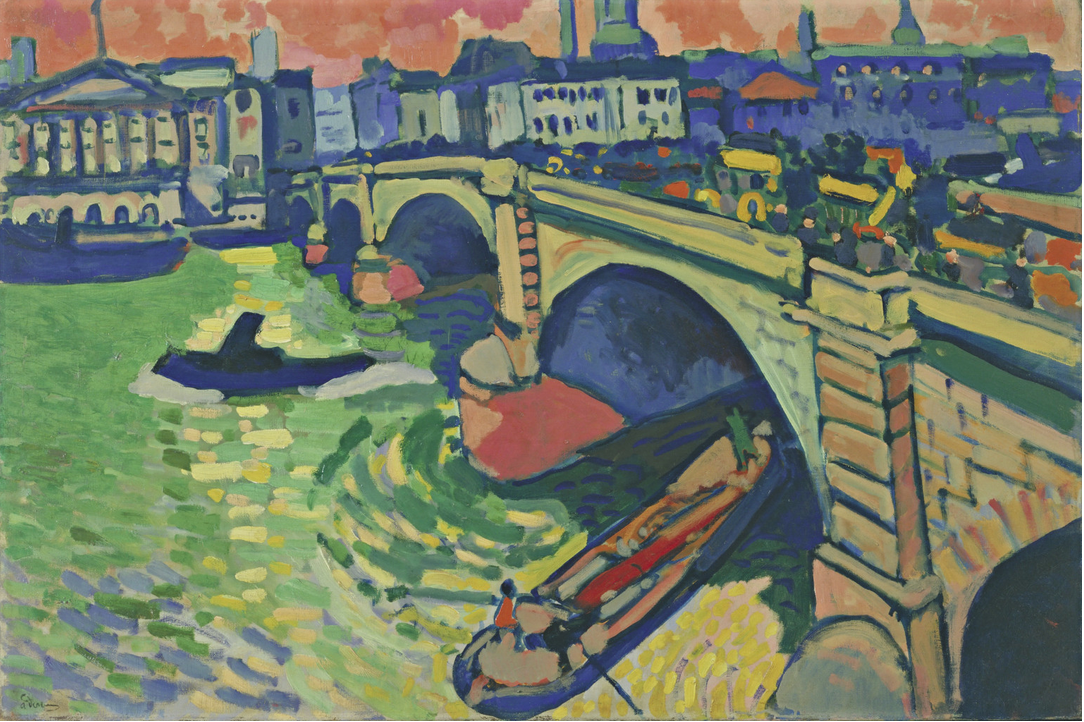
London Bridge, 1905
Andre Derain’s bright coloured canvases have a childlike faux naive feel about them and may well have laid the ground for that form of expression. However, his art style was birthed from Fauvism, a movement he co-founded with artist Henri Matisse, which celebrated bold colour. It got its name when an art critic saw Derain and Matisse’s colourful paintings at the 1905 Salon d’Automne in Paris and claimed the artists were ‘fauves’ (wild beasts!). It doesn’t sound like a compliment but the name stuck. That was the year natural colour stopped describing the world. His Charing Cross Bridge, 1905 looks like it may have been scrawled in crayons by school children, and his striking depiction was, indeed, childlike colour play and experimentation, but more so an intense sensory response to the subject. Interestingly, he returned to classical depictions in his later years but it was Fauvism that etched his name in history not picture-perfect portraits and landscapes.
CLAUDE PISSARO – Lordship Lane Dulwich, 1871
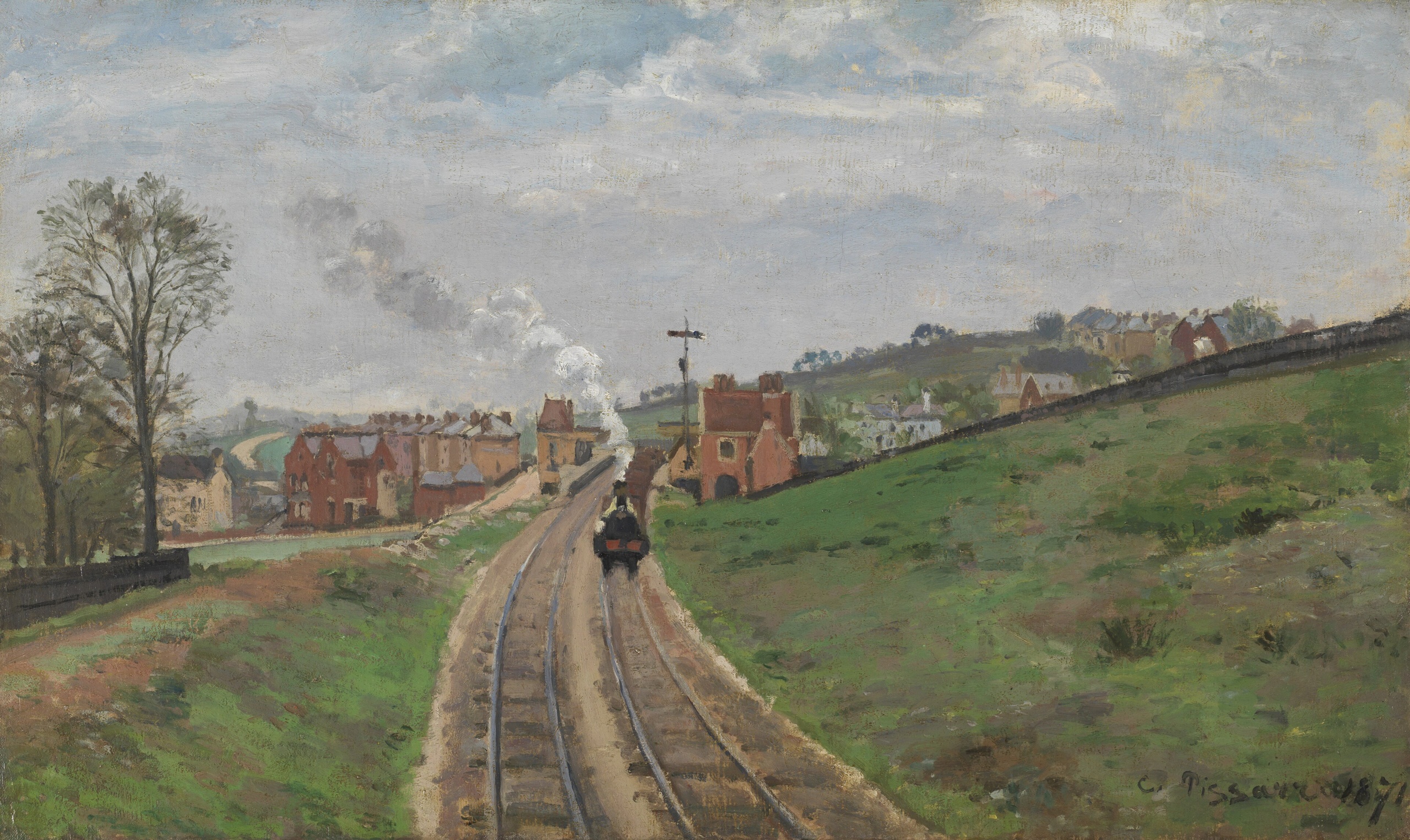
Lordship Lane Dulwich (1871)
London was a bit of a safe haven for artists fleeing European wars. Pissaro, the Father of Impressionism, made a dash for our capital at the onset of the Franco-Prussian war, staying for a year and painting celebrated city scenes. The Romantic and Neoclassical art movements were opposing camps in creative expression from 1750 to 1850, and Impressionism was birthed from the pinch in the duel by the 1860s. His choppy brushwork applied using a palette knife makes no attempt to depict the scene with photographic detail. The dance of light on the canvas was seen as more important than form.