What’s Hot Bloomsbury?

Capital Odyssey: A Flaneur’s Bloomsbury Wanderings 

In our busy, buzzing capital city, destination and purpose lie at the heart of every short trip. The butterfly-like flaneur might turn that on its head and float through the  beating heart of our metropolis, wandering aimlessly just for the hell of it. What’s a flaneur? An urban wanderer, basically.

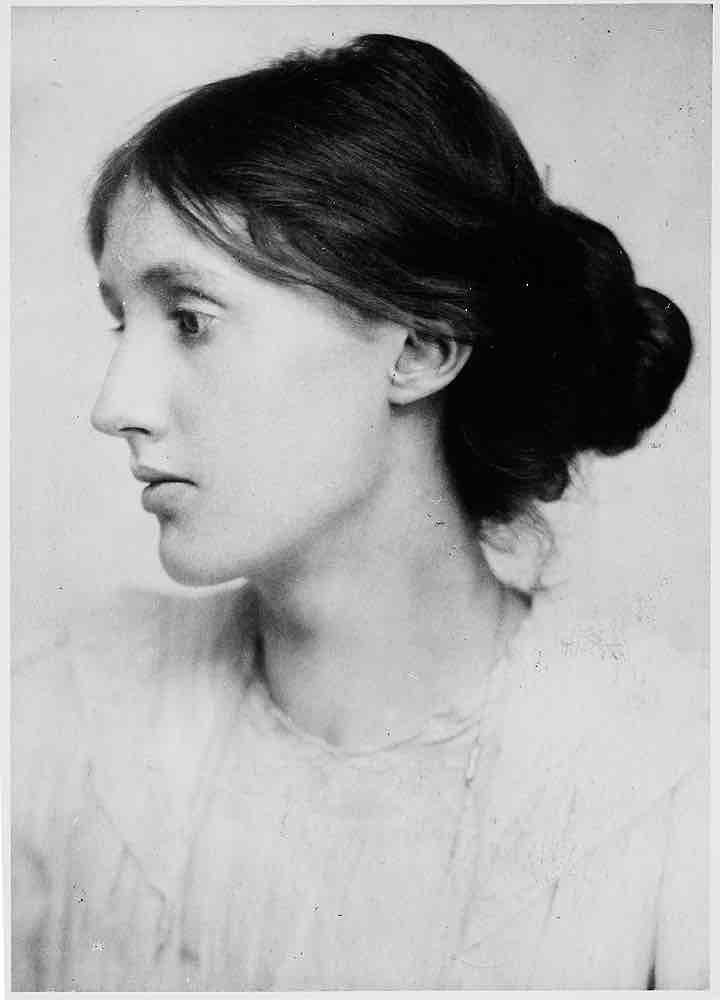
The writings of  20th-century modernist author Virginia Woolf have made the flaneur topical and fashionable again. In Woolf’s essay ‘Street Haunting: A London Adventure’ the narrator leaves her house with one vague purpose – to buy a pencil – this is soon forgotten as she wanders the streets engaging in the off the cuff and happenchance; going with the flow, at one with the stream of urban consciousness and London’s chaotic energy. Every mundane chance counter, every overlooked secondhand book shop, every cul-de sac mews draped in ivy or conversation with a stranger, now a mindful (not necessarily meaningful) experience.

The Pencil
Virginia Woolf, Bloomsbury, Bloomsbury Group, flaneur

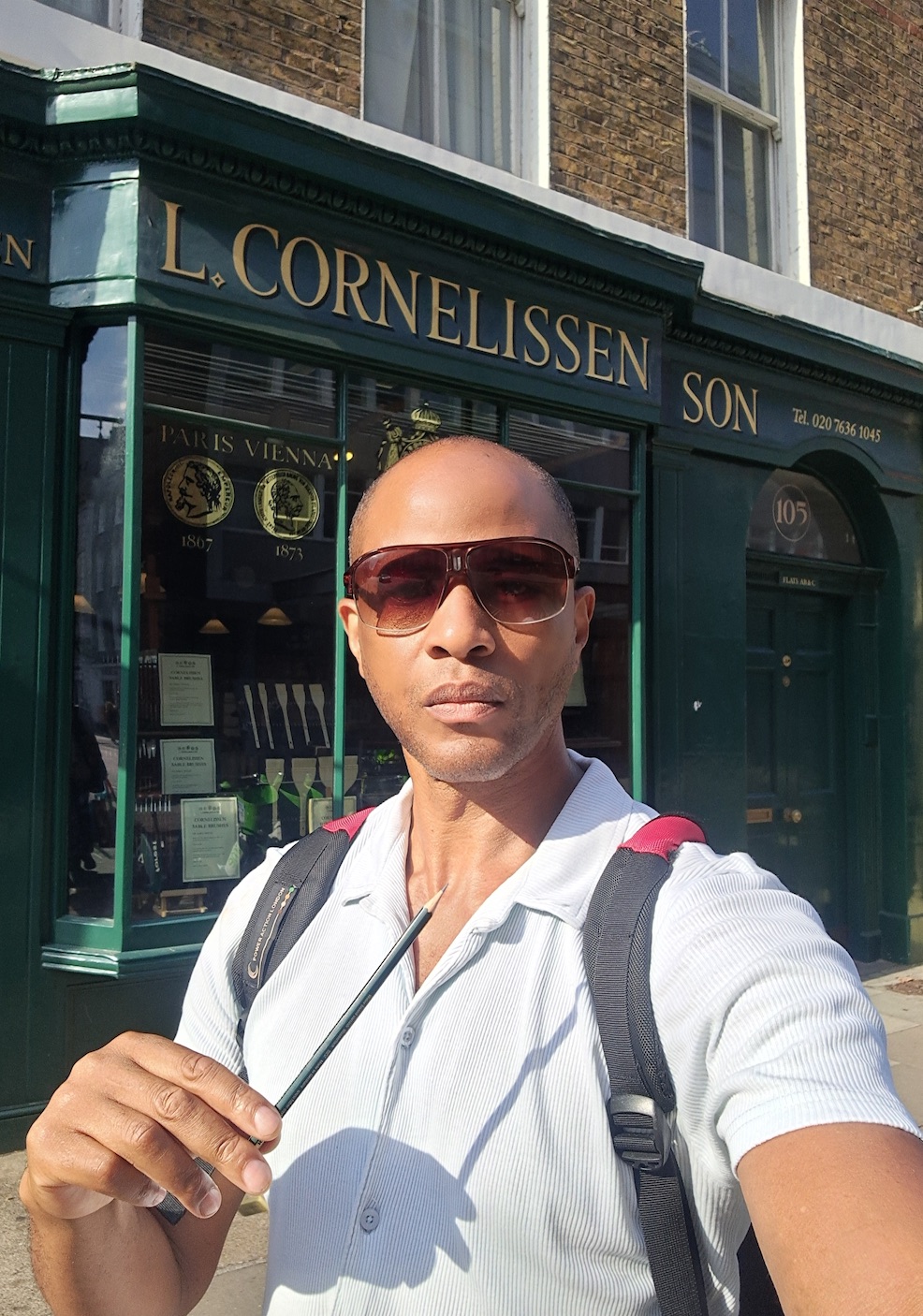
Inspired, I put away my digital notebook and magazine editor’s hat and went looking for my own flaneur pencil, to similarly, find meaning in non-purpose and engage the sublime magic of London in summertime. So, let’s get the whole pencil buying thing out the way early and head off.

Well, actually, no. That’s much too much purpose, way too early. Purposeful pencil-buying might get in the way of my little urban experiment. So, I will leave that to the end….like Virginia Woolf did.

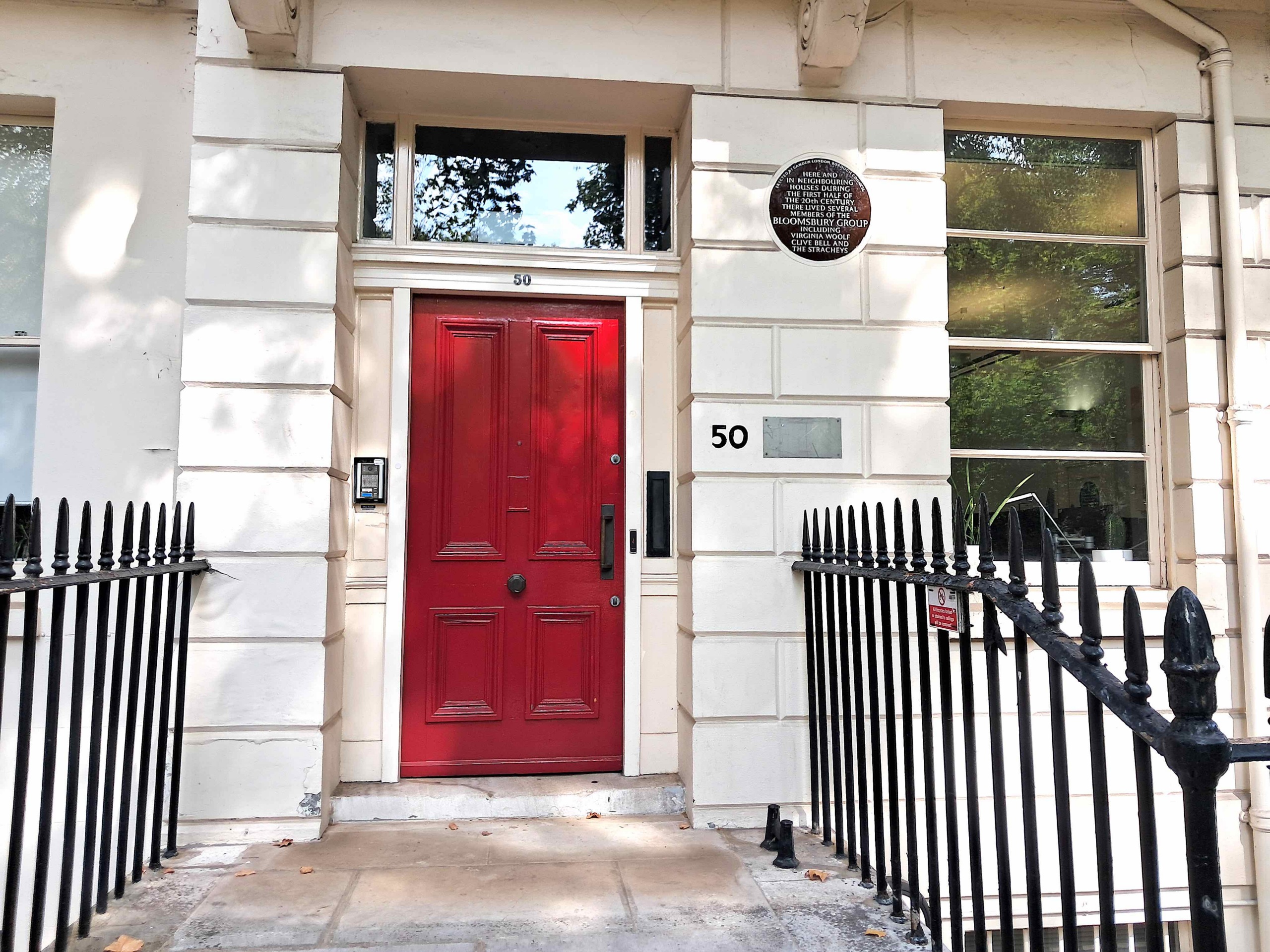
OK, why not begin our capital odyssey in Bloomsbury, at Virginia Woolf’s former address at 46 Gordon Square? Woolf was  a founder member of the Bloomsbury Group of intellectuals and creatives who put the area on the cultural map – and quite emphatically so, because here am I about to  embark on a flaneur’s wanderings around Bloomsbury 105 years later!
Virginia Woolf, Bloomsbury, Bloomsbury Group,

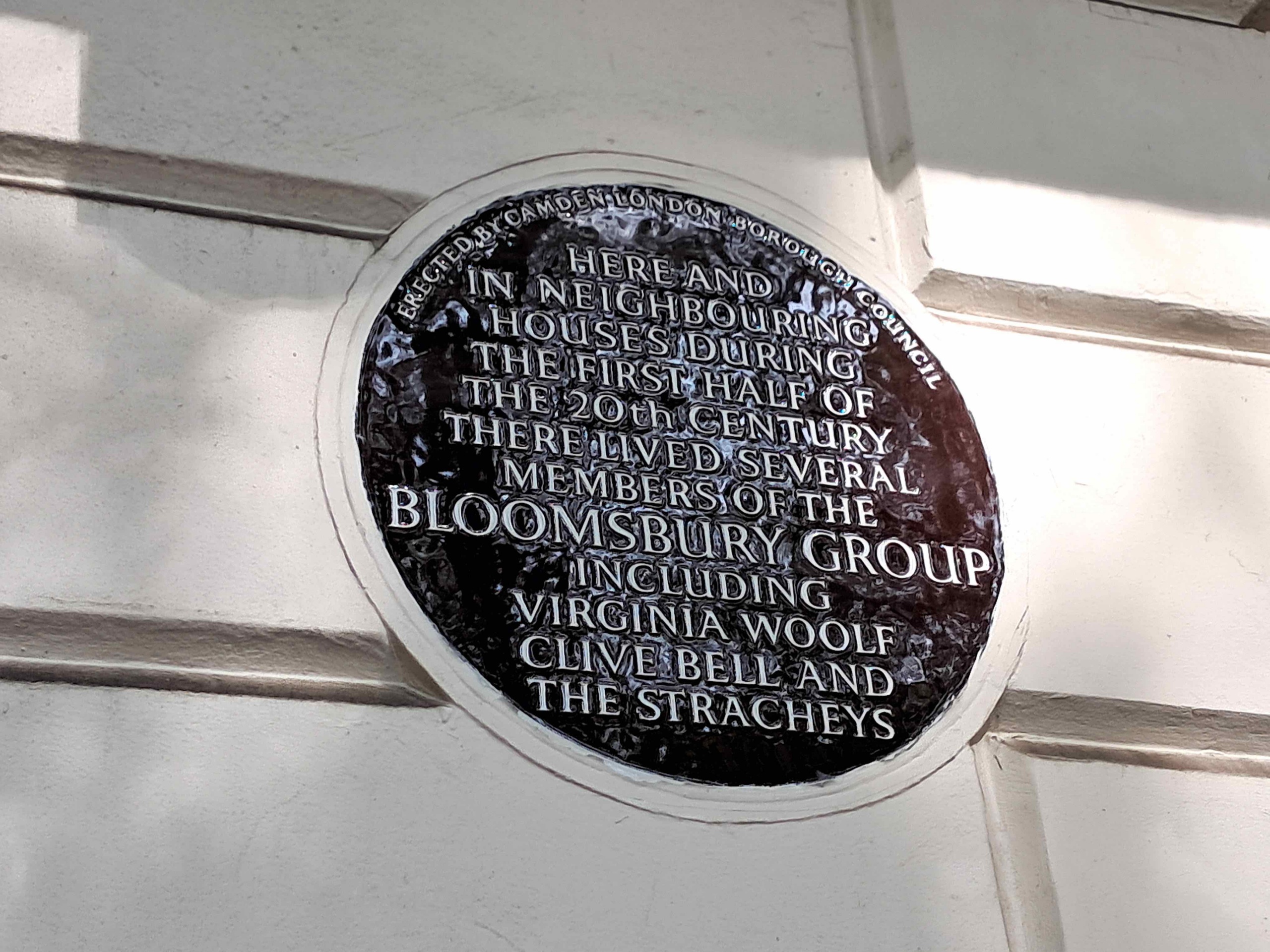
Virginia Woolf’s home on Gordon Square
Virginia Woolf, Bloomsbury, Bloomsbury Group,

Virginia Woolfe moved to 46 Gordon Square (now number 50) in 1904. A brown heritage plaque marks the address. The Bloomsbury Circle of artists and intellectuals would meet here every Thursday to drink coffee, down a few whiskies and talk culture. In one of her essays, she makes it clear that the movement began and was based here. The area is a leafy and verdant density of garden squares. Why so many garden squares in Bloomsbury? Very pretty. There’s certainly a noticeable concentration, giving the neighbourhood a tranquil air, just the tonic for deep-thinking intellectuals or creative spirits. Gordon Square, Tavistock Square, Woburn Square, Torrington Square, all cheek by jowl.
Virginia Woolf, Bloomsbury, Bloomsbury Group,

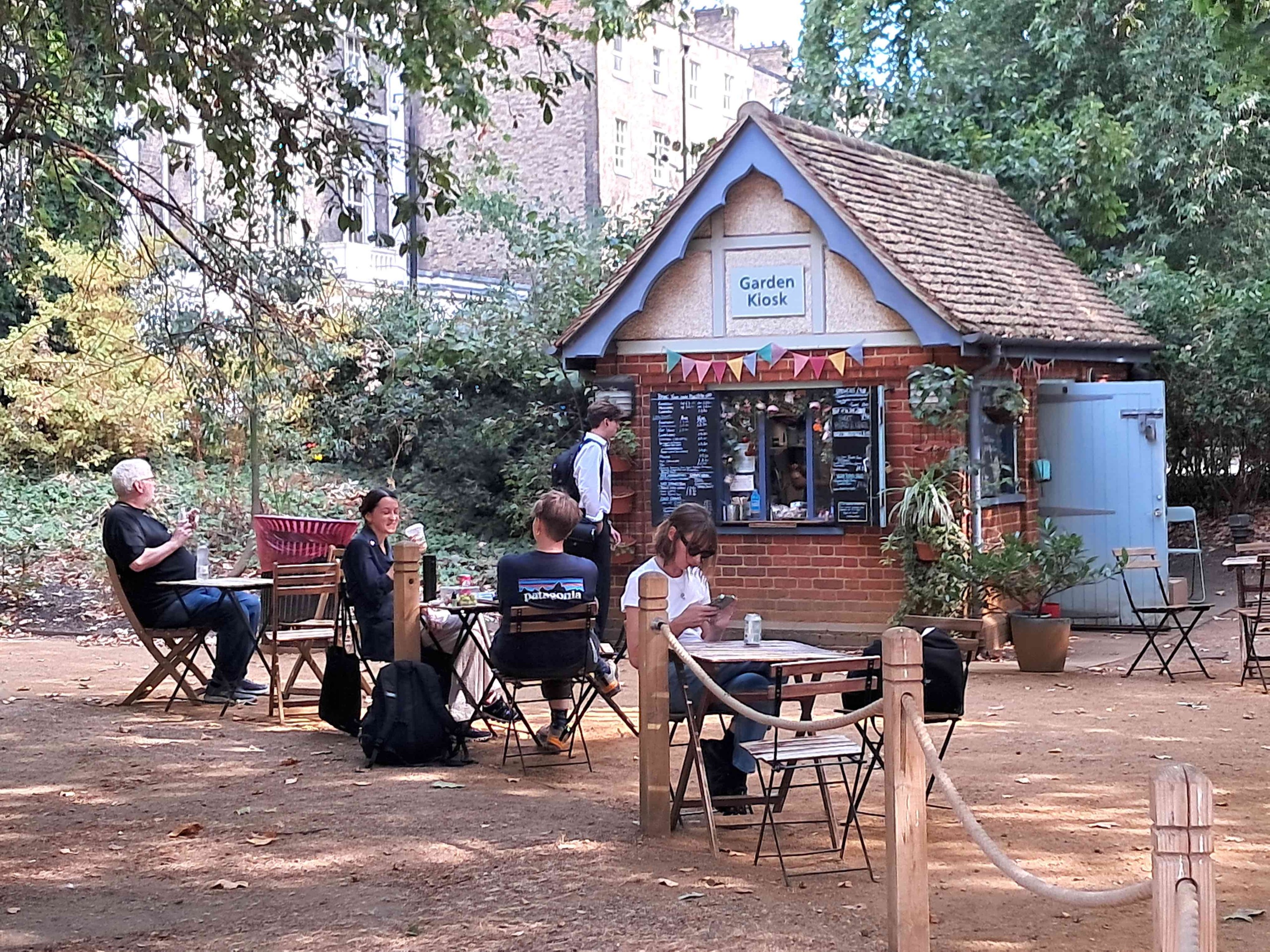
A slow wander through the pleasant gardens of Gordon Square ….and just by the entrance closest to their former home, a coffee kiosk with the look of a magical, creaky cottage from centuries past. Not sure about a coffee or cappuccino in this hot weather but the spread of homemade pastries, cakes, sweets, snacks and sandwiches are pretty tempting. Even at this time of the morning, the benches dotted around this tranquil green space are already taken up by book reading, leisurely types somewhat suffused with the Woolfian vibe, almost by osmosis.

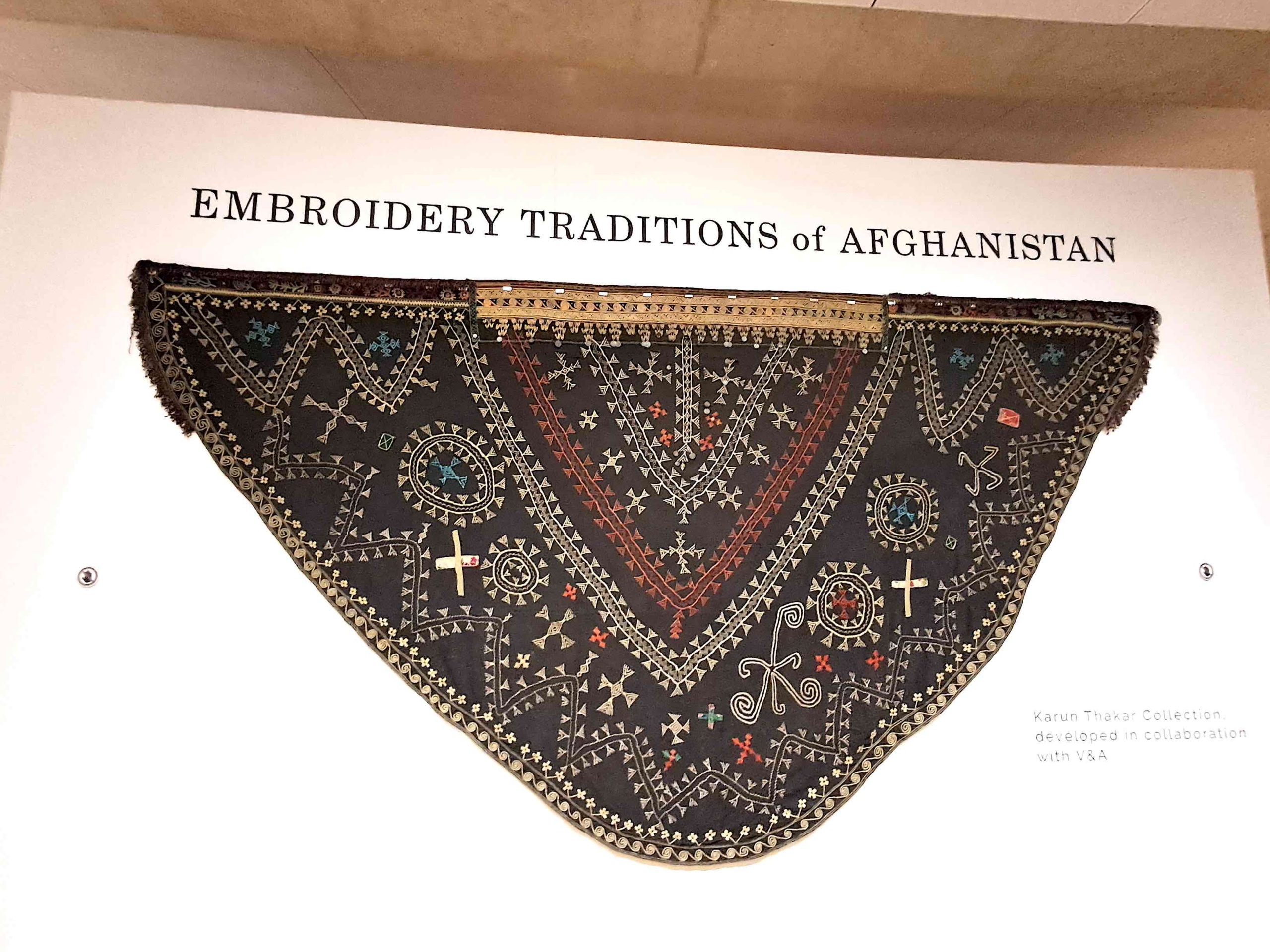
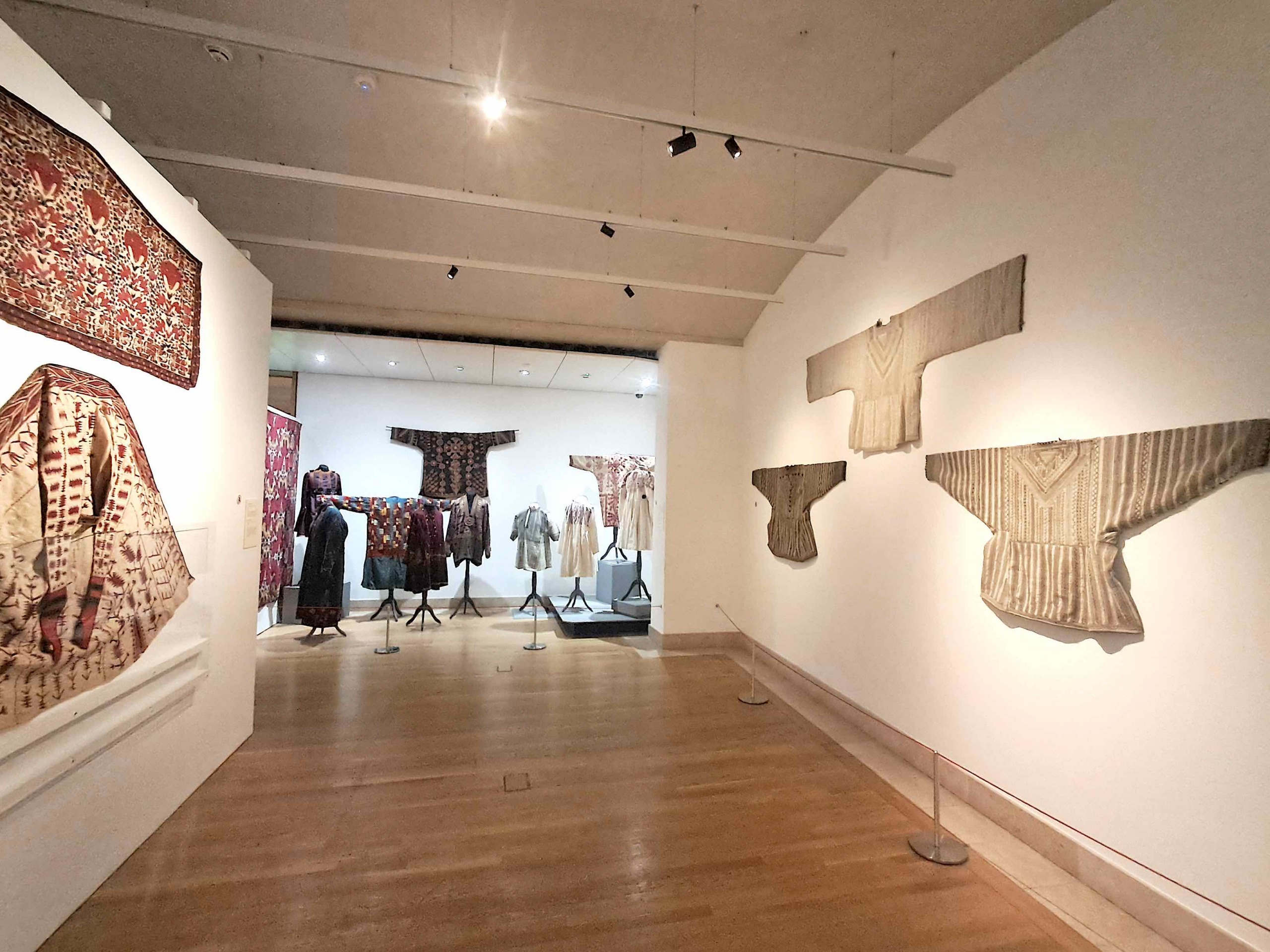
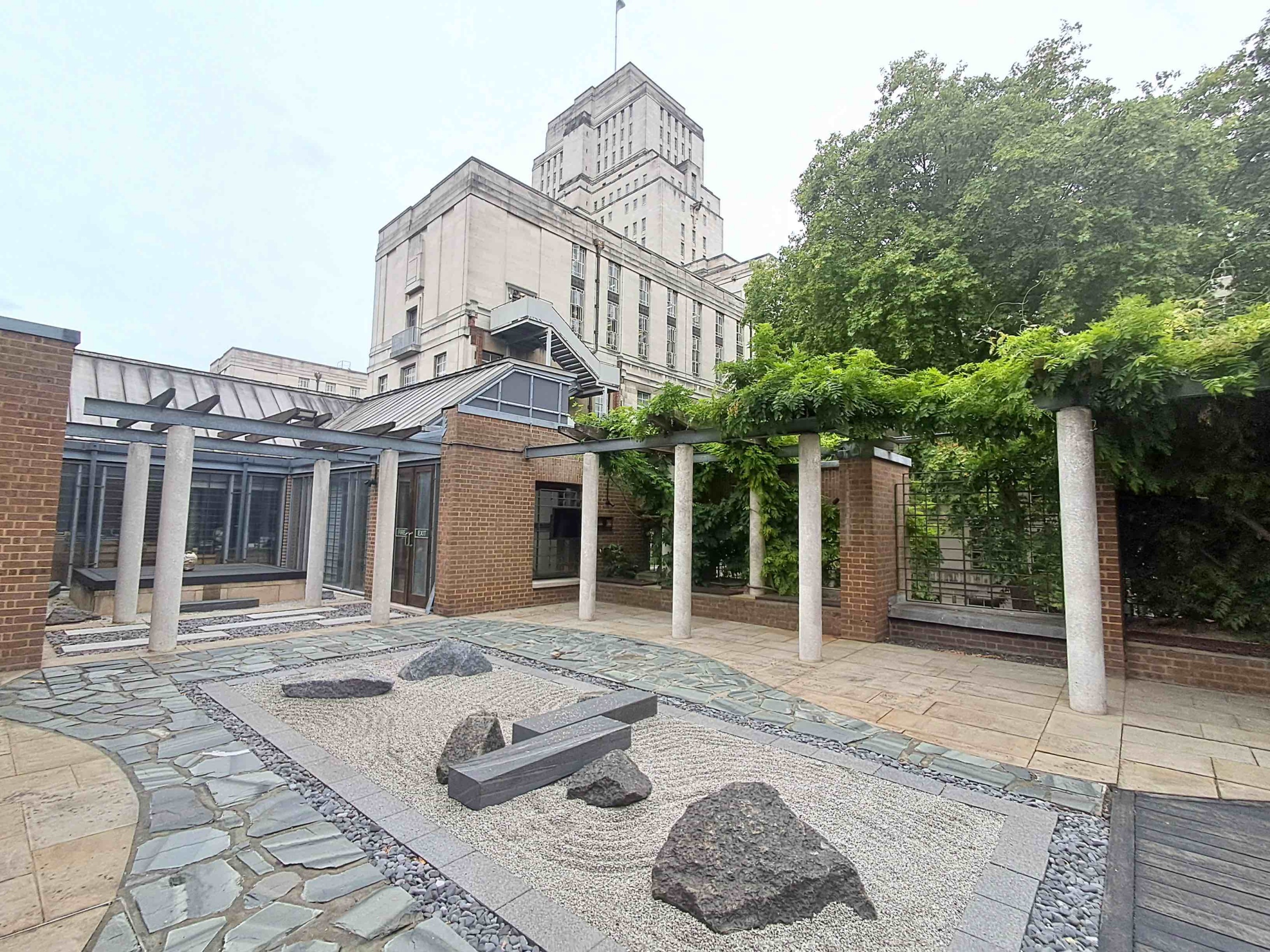
Today I am consciously avoiding the big cultural institutions, galleries and museums, the British museum and the like because it’s my Flaneur Day, so I do as they do.  SOAS University is just down the road from Gordon Square on Thornhaugh Street and the Embroidery Traditions of Afghanistan exhibition in the SOAS Gallery obviously doesn’t count as a biggie.  I stumbled upon this gallery after my coffee in Gordon Square and discovered another hidden secret – a tranquil Japanese Garden on the gallery’s top floor. A welcome sanctuary from the austere architecture of the wider cityscape Yet a nice fit within the peaceful cadence of the garden squares of Bloomsbury.
Virginia Woolf, Bloomsbury, Bloomsbury Group,

Virginia Woolf, Bloomsbury, Bloomsbury Group,


Virginia Woolf, Bloomsbury, Bloomsbury Group,

Japanese rock garden on the top floor of SOAS Gallery

I find myself  being drawn in the direction of the British Museum on Great Russell Street. Not sure why I am now in this vicinity. I just can’t help myself, I guess, That’s where all the crowds and tourists are heading and you find yourself ebbing and flowing with the wave. Not the wave I want today, on my stream of urban consciousness. I won’t go in. I won’t spoil my flaneur experiment.

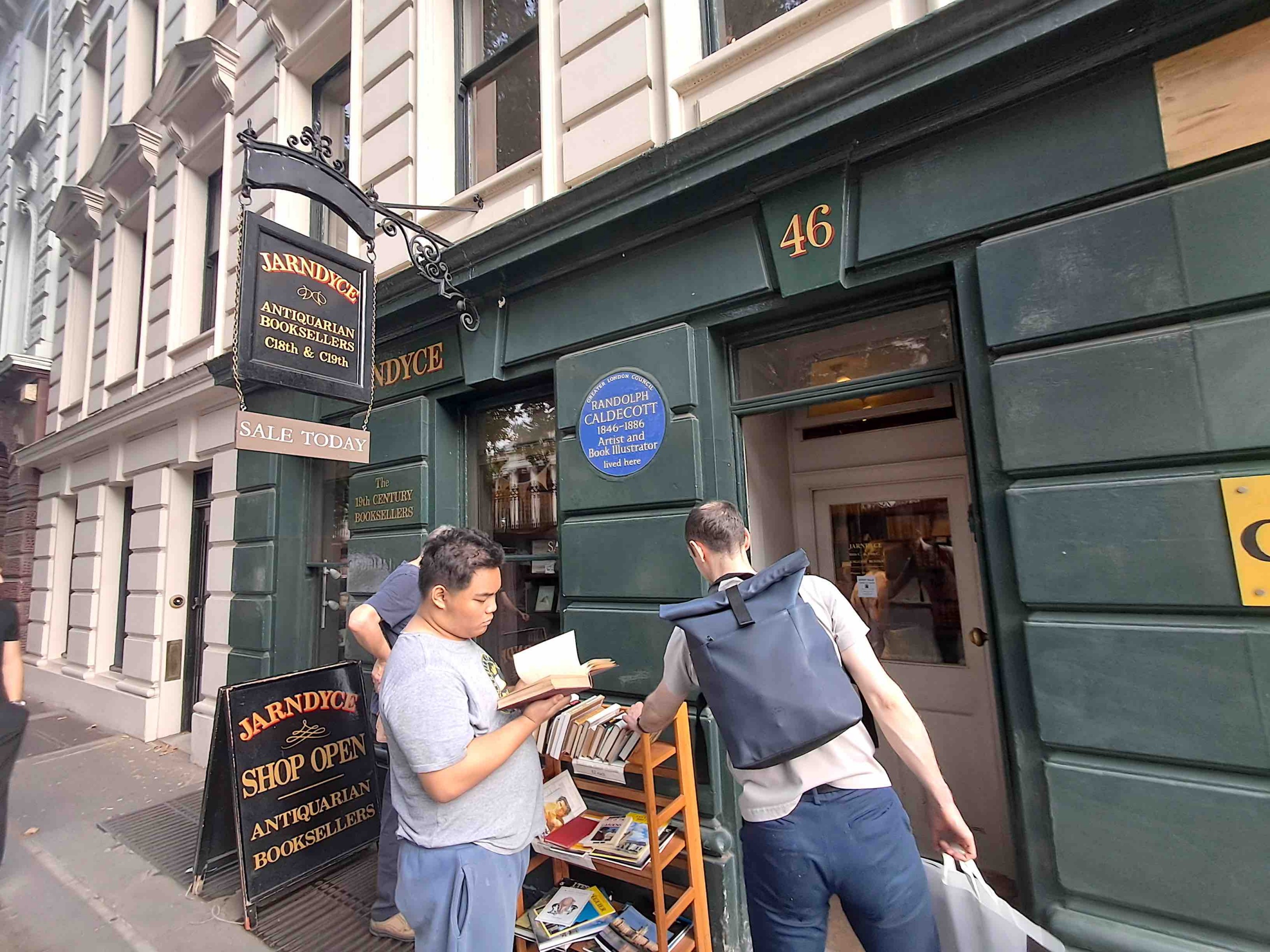
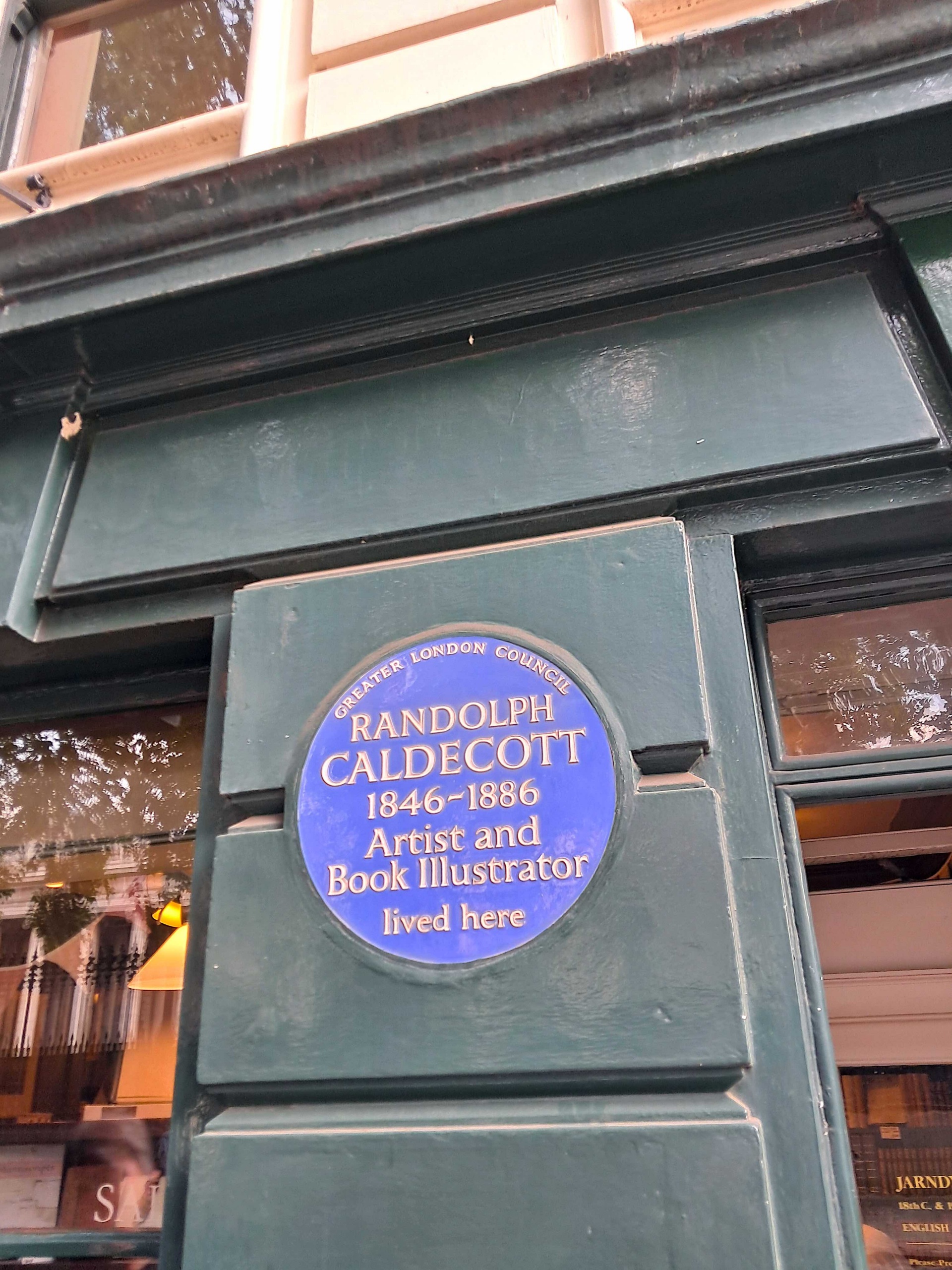
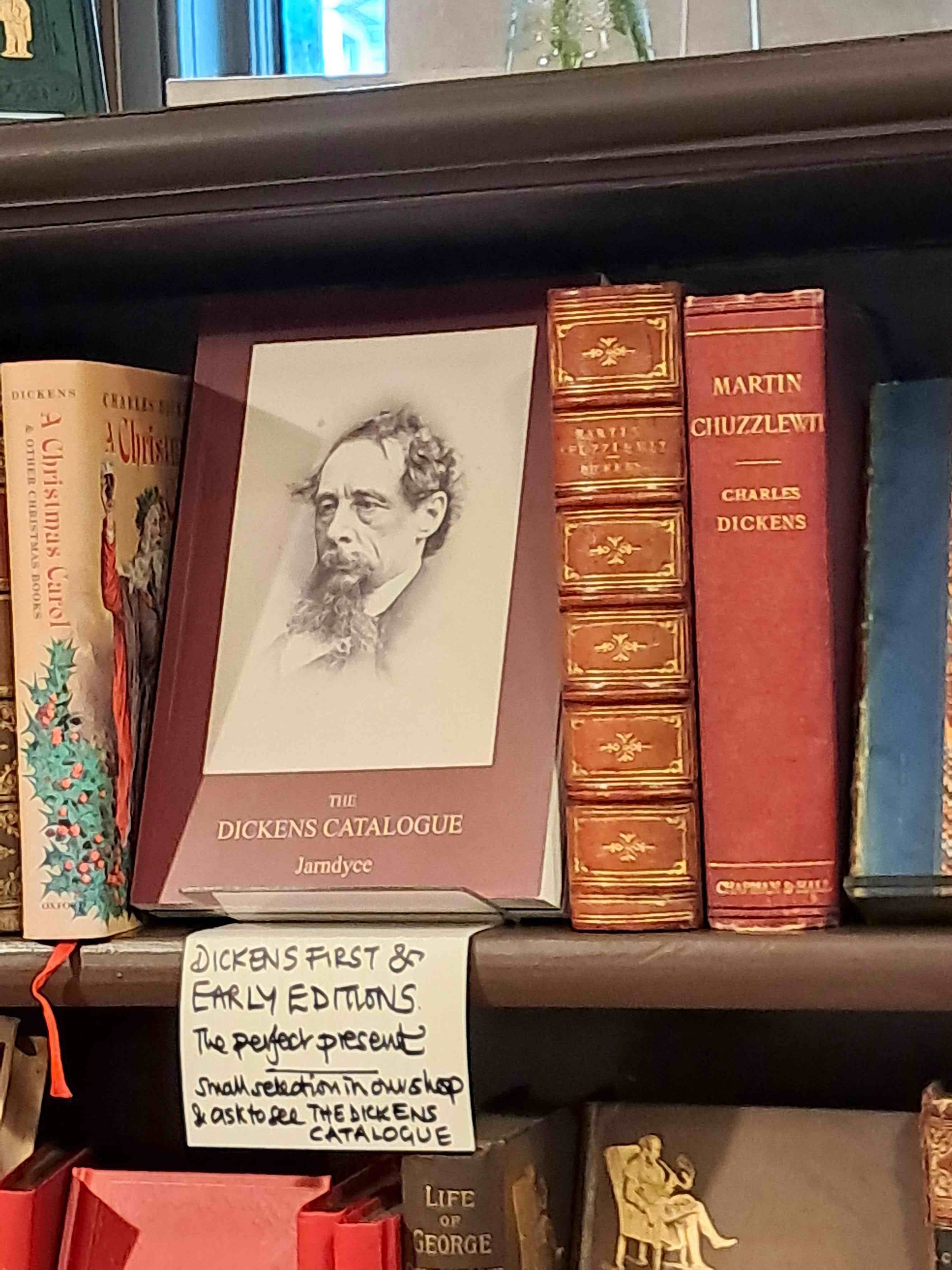
And across the road from the British Museum (I didnt go in!) the Jarndyce Antiquarian Booksellers is all Dickensian and Victorian, like a perfectly preserved 19th-century time capsule (I did go in). There’s no walking past it. Inside you’ll find original Dickensian books and texts, tomes and historic pamphlets. Rich in so many other ways and priced for collectors with cultured tastes and big bank balances, so in that way too.

Virginia Woolf, Bloomsbury, Bloomsbury Group,

Virginia Woolf, Bloomsbury, Bloomsbury Group,

Virginia Woolf, Bloomsbury, Bloomsbury Group,

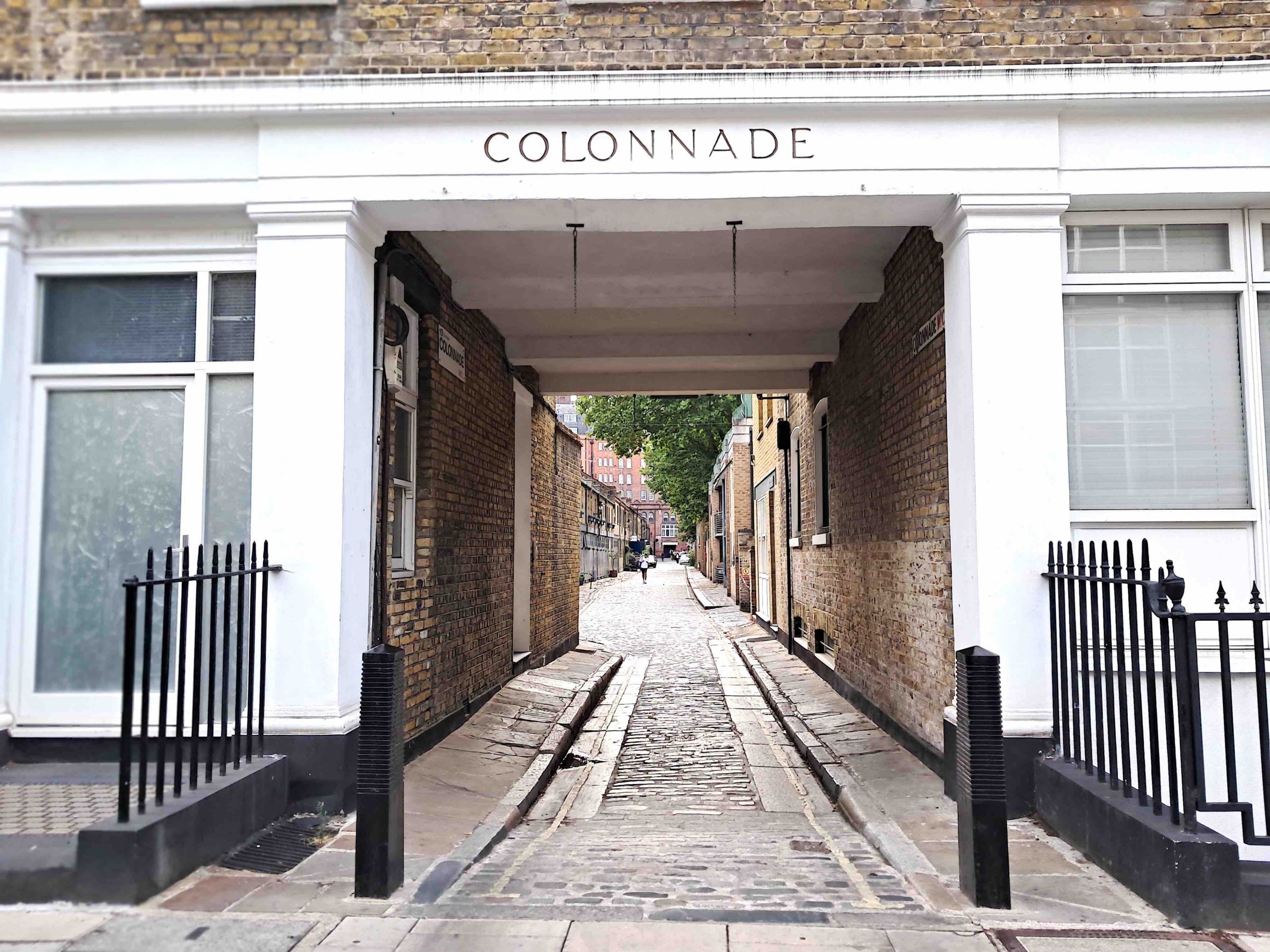
I know of the Horse Hospital (built in 1797) but the magnificent cobbled colonnade leading up to it was what first caught my eye. Never seen it before, Well, perhaps, I had but today I am, of course, more mindful of nuance in the cityscape. This colonnade, laid out by architect James Burton in the 1790s, has echoes of centuries past, when the horse hospital was an actual horse hospital. Today, it serves as an an arts centre but the historic horse ramps, and, indeed, the colonnade  remain.

Virginia Woolf, Bloomsbury, Bloomsbury Group,

You can wander through Bloomsbury all day and night but sometimes the effort in staying true to your flaneurial spirit makes you look at the city through a lopsided critical lens.  Just passed the Charles Dickens Museum…but I can’t go in there. No it’s nothing that he’s done (never knew the bloke) but the Charles Dickens Museum (although small) is a little too big. So, I wander on.

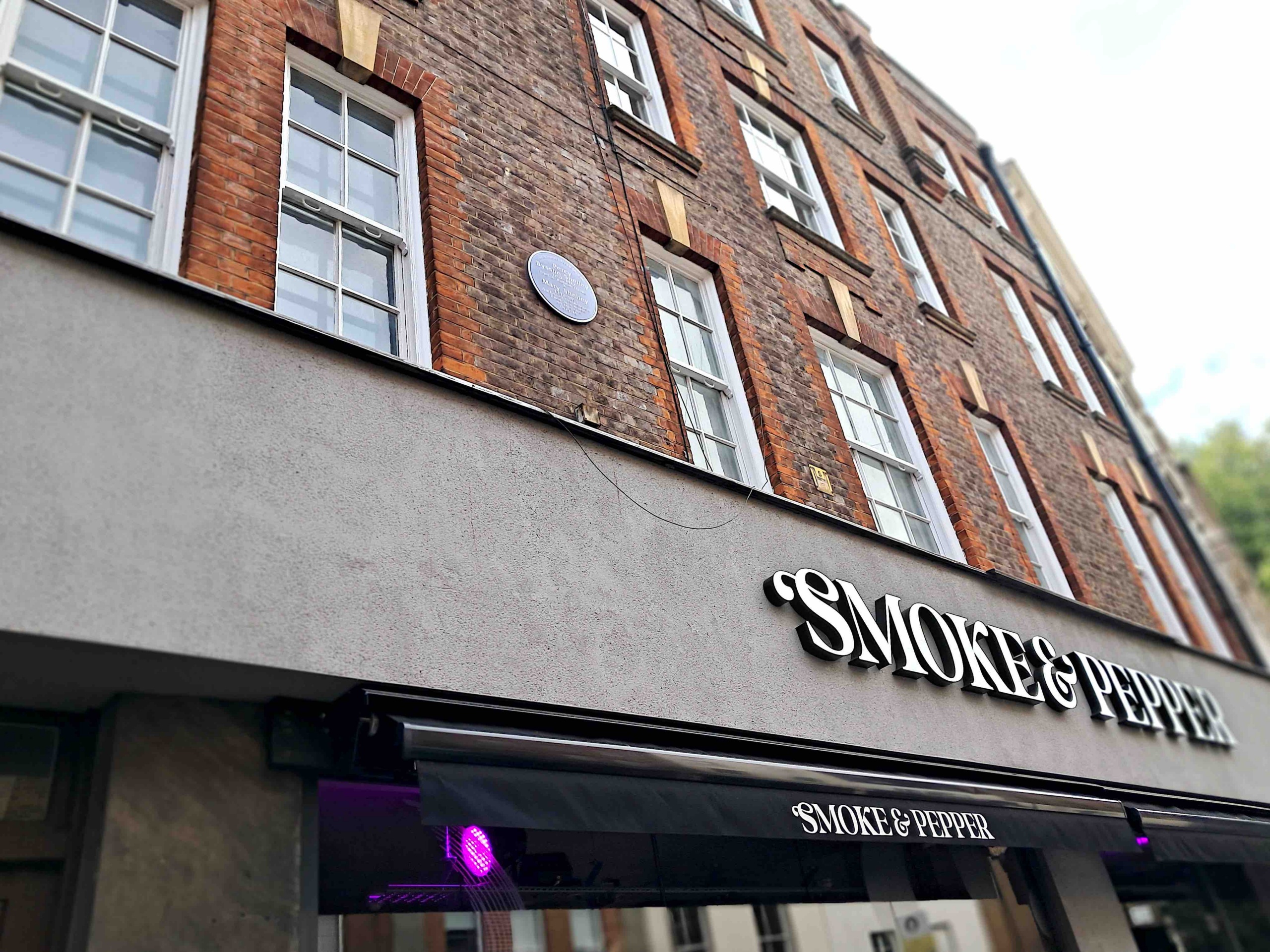
Percy and Mary Shelley’s former home on 87 Marchmont Street is an interesting find. The house is no longer there, demolished in 1904, but there’s a brown English Heritage plaque barely visible metres up the wall. I don’t get it? You’ll have a problem reading that from down here without a telescope or binoculars.  The Shelley’s lived there with Mary Shelley’s step-sister Clair Claremont, who was pregnant with Lord Byron’s child. The then landlady Mrs Harbottle may well have been uneasy about the fact the three of them were on the run from a debt collector but put up with them until 1816 when they left to join Lord Byron in Lake Geneva, Switzerland.

Virginia Woolf, Bloomsbury, Bloomsbury Group,

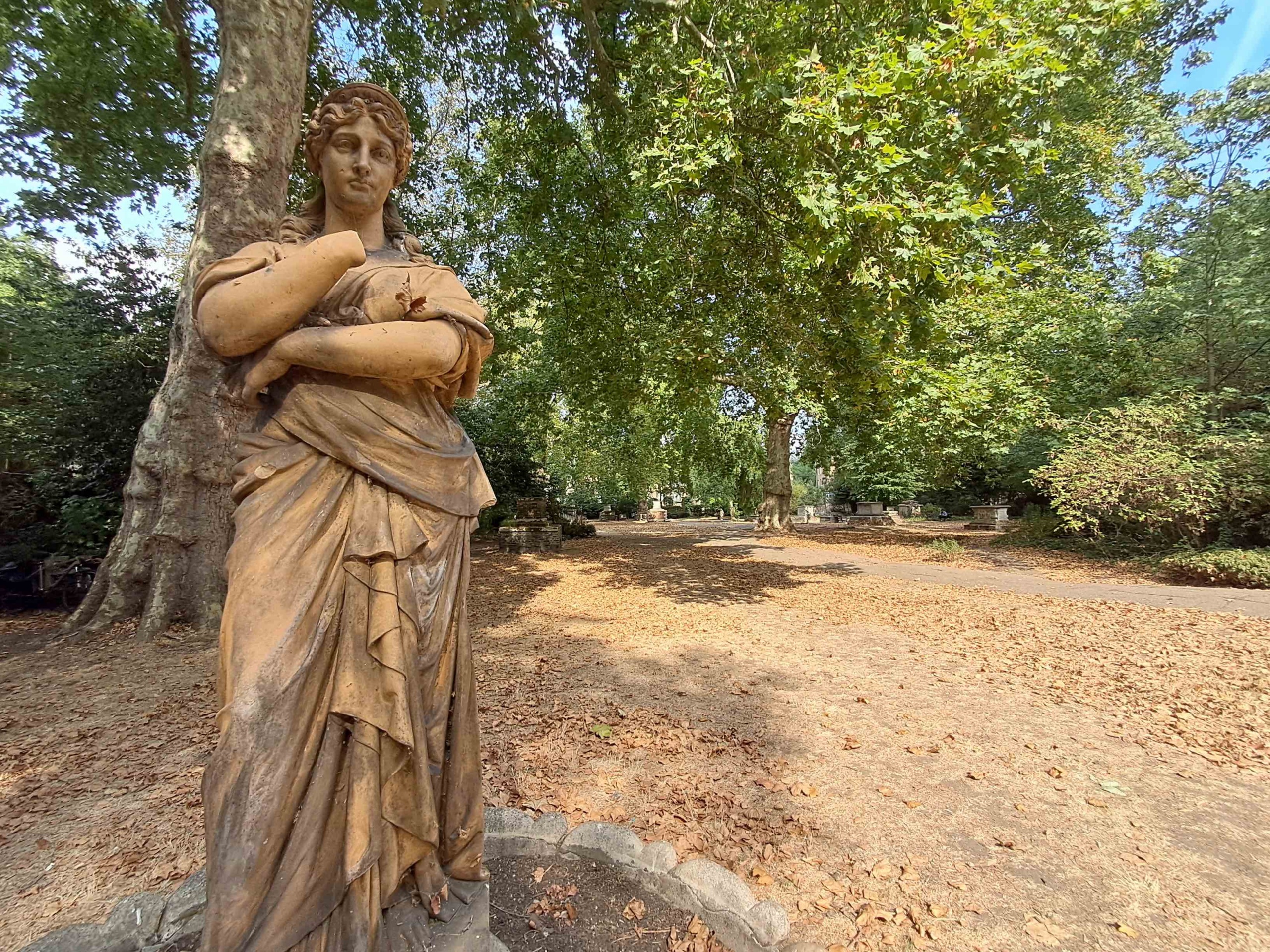
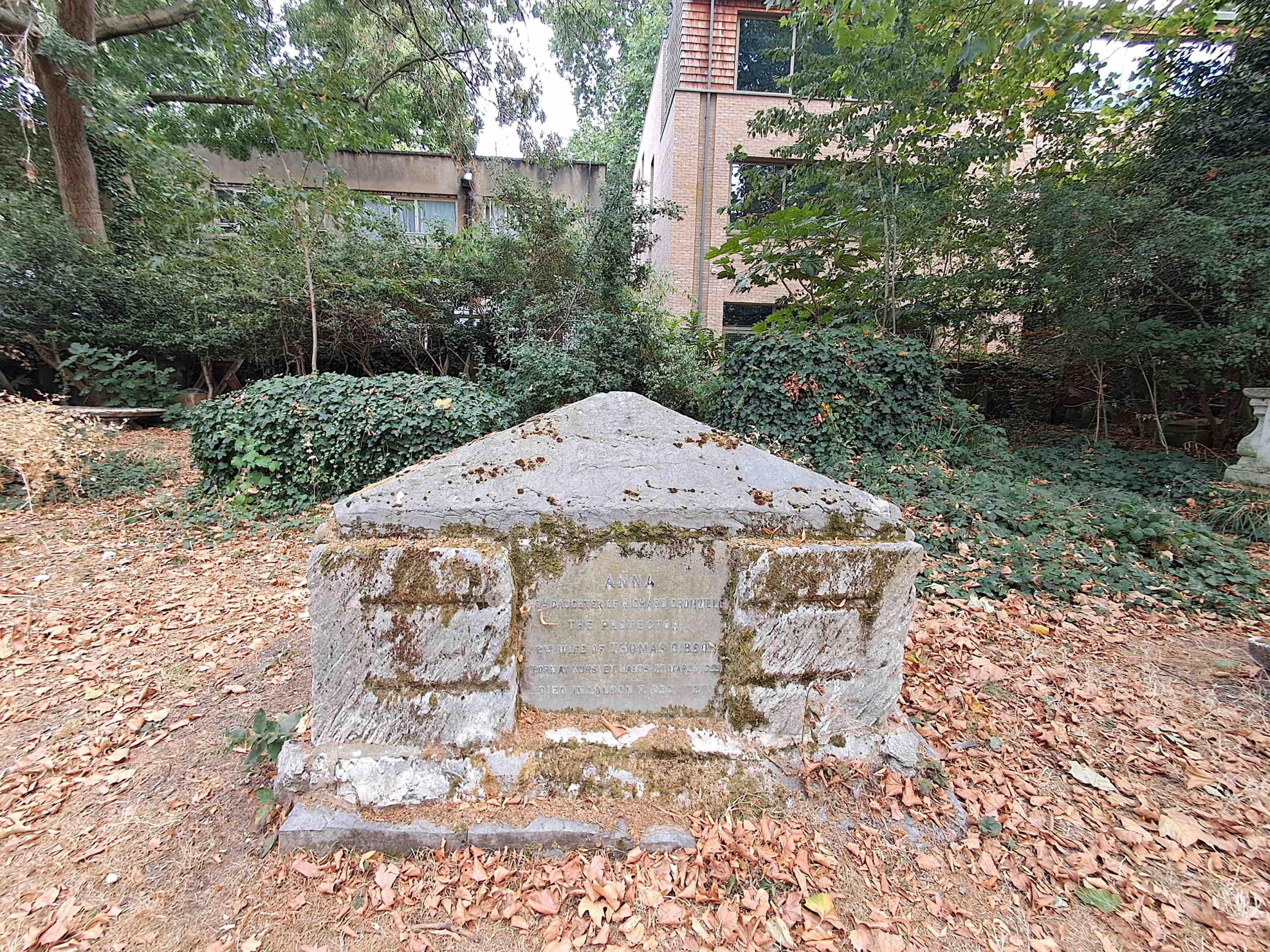
Opened in 1715, St George’s garden is a historic cemetery-turned public garden and yes, like many others it somehow holds echoes of its solemn, sorrowful former use and you really feel the hallowed ground. Look around the garden’s central area and you’ll find the humble, nondescript grave of Oliver Cromwell’s granddaughter Anna Gibson

Virginia Woolf, Bloomsbury, Bloomsbury Group,

Virginia Woolf, Bloomsbury, Bloomsbury Group,

The grave of Oliver Cromwell’s granddaughter Anna Gibson

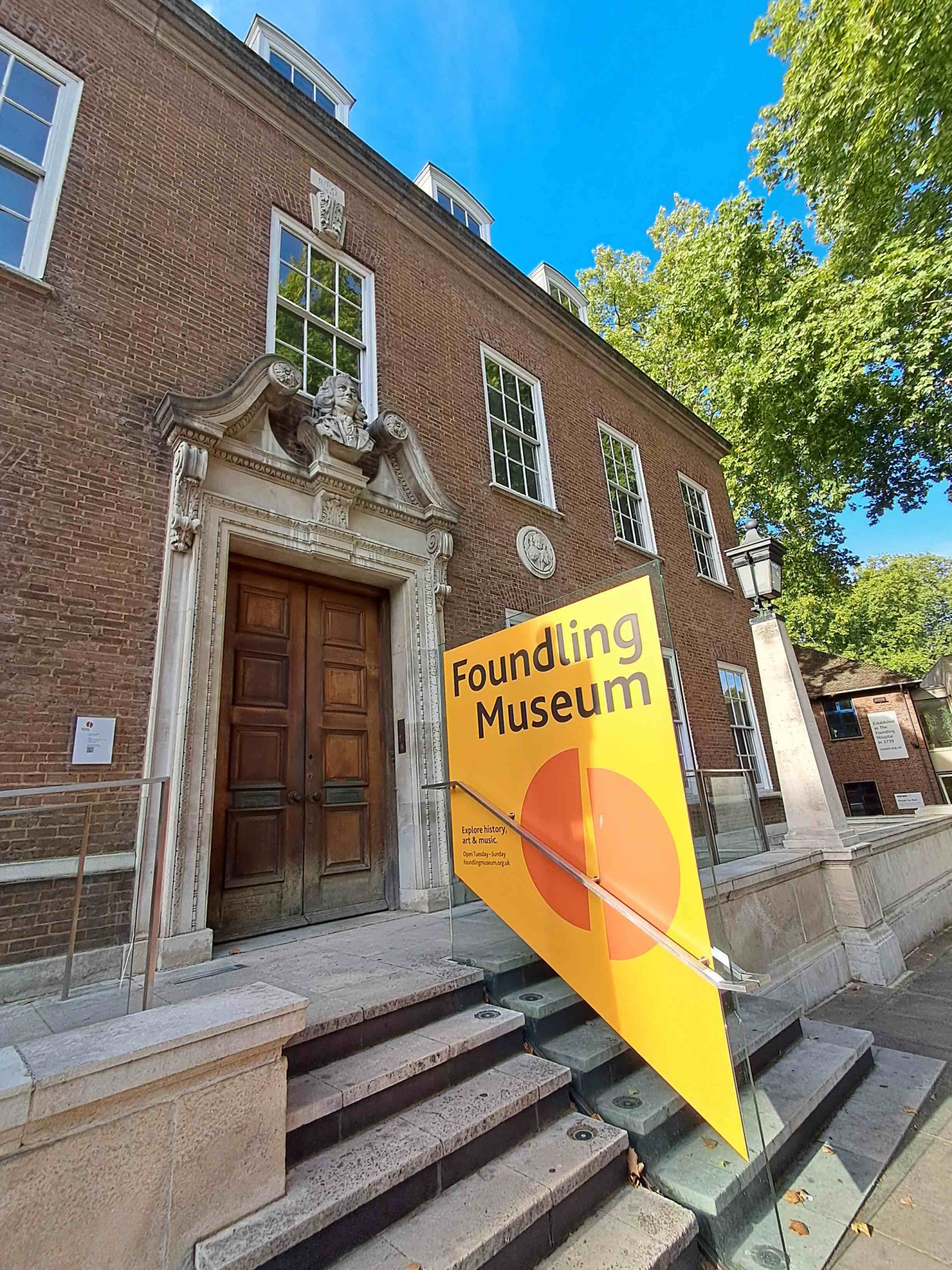
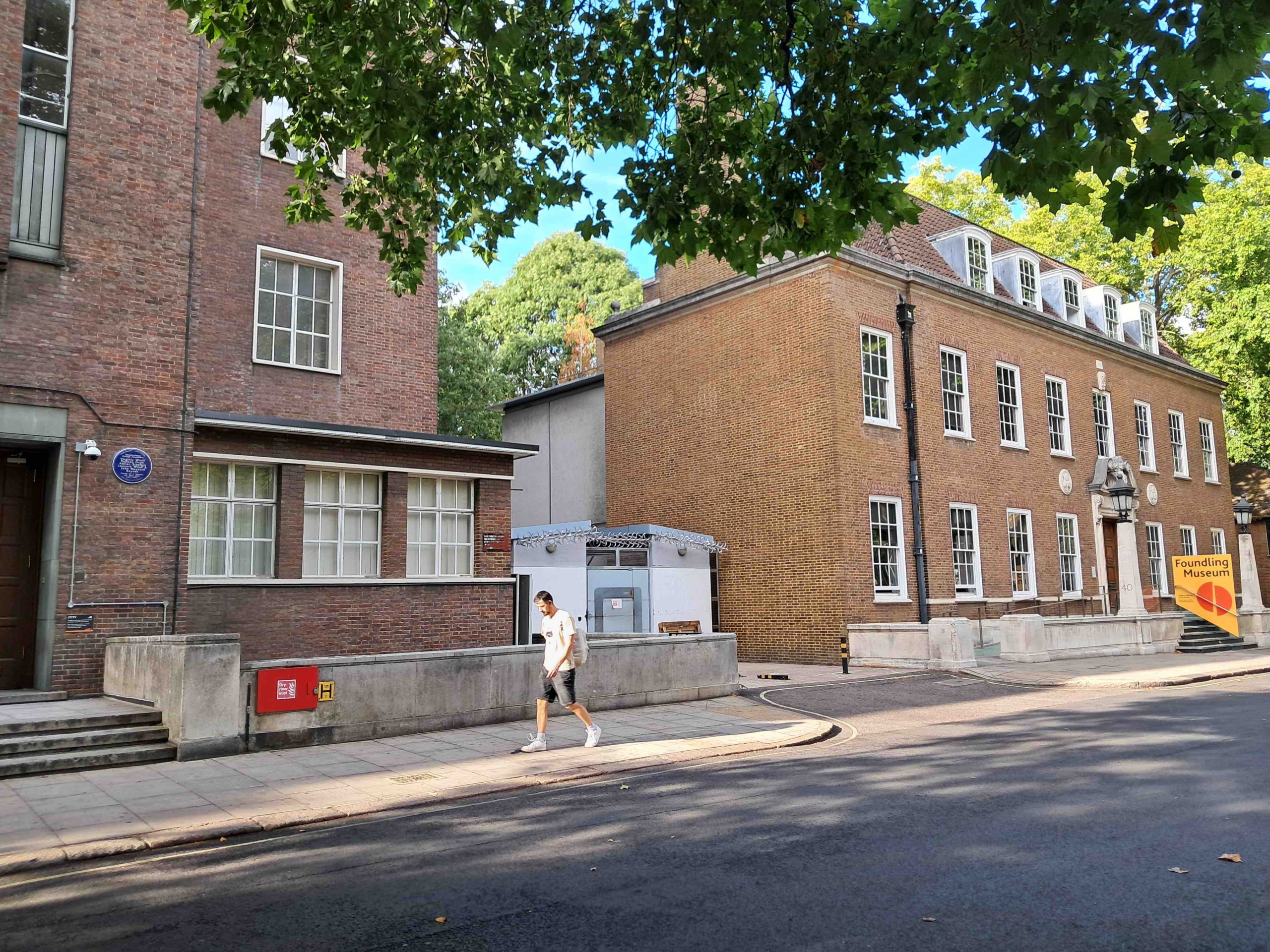
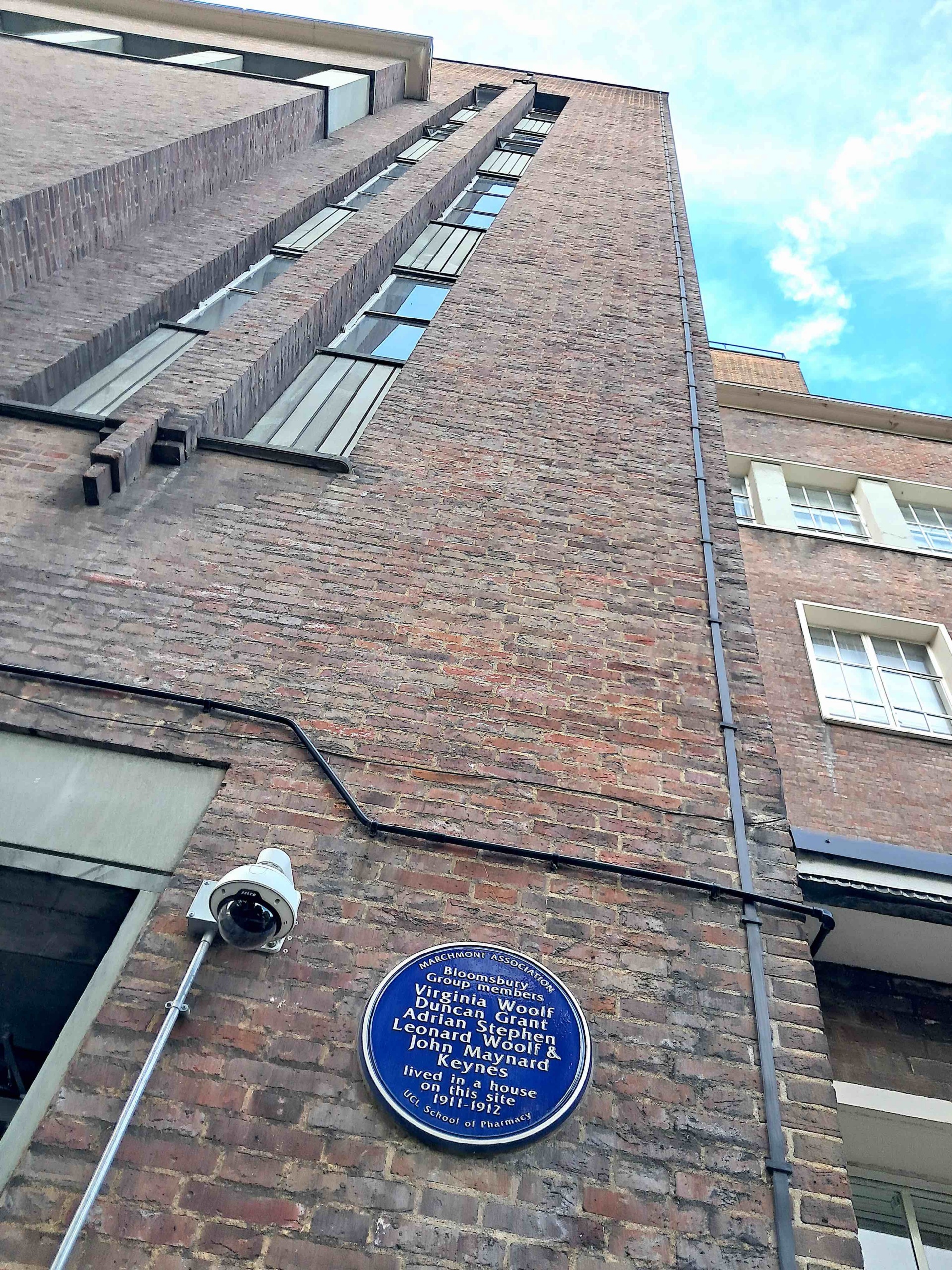
The Foundling Museum is just round the corner. Established in 1739 as the first children’s charity and earliest art gallery it attracted some cultural heavyweights to support its cause. Artist William Hogarth lent his considerable wealth and influence and his paintings hung in the hospital, attracting well-heeled patrons who dug deeply to support the hospital. The composer George Friderik Handel was another benefactor. The nearby Handel Street is named after him. And you’ll find another one of Virginia Woolfe’s former addresses right next to the museum. She lived here at 38 Brunswick Square (those Bloomsbury Squares again) and rented out floors and rooms to their friends, including esteemed economist John Maynard Keyne.

Virginia Woolf, Bloomsbury, Bloomsbury Group,

Capital Odyssey: A Flaneur’s Bloomsbury Wanderings  In our busy, buzzing capital city, destination and purpose lie at the heart of every short trip. The butterfly-like flaneur might turn that on its head and float through the  beating heart of our metropolis  wandering aimlessly just for the hell of it. What's a flaneur? An urban wanderer basically. The writings of  20th-century modernist author Virginia Woolf have made the flaneur topical, and fashionable again. In Woolf's essay ‘Street Haunting: A London Adventure’ the narrator leaves her house with one vague purpose - to buy a pencil - this is soon forgotten as she wanders the streets engaging in the off the cuff and happenchance; going with the flow, at one with the stream of urban consciousness and London’s chaotic energy. Every mundane chance counter, every overlooked secondhand book shop, every cul-de sac mews draped in ivy or conversation with a stranger, now a mindful (not necessarily meaningful) experience. Pic of Virginia Woolf Inspired, I put away my digital notebook and editor’s hat and went out looking for my own flaneur pencil, to, similarly, find meaning in non-purpose and engage the sublime magic of London in summertime. So, let’s get the whole pencil buying thing out the way early and head off. Pic of Me Well, actually, no. That’s much too much purpose, way too early. Purposeful pencil-buying might get in the way of my little urban experiment. So, I will leave that to the end….like Virginia Woolf did. OK, why not begin our capital odyssey in Bloomsbury, at Virginia Woolf’s former address at 46 Gordon Square? Woolf was famously a member of the Bloomsbury Group of intellectuals and creatives who put the area on the cultural map - and quite emphatically, because here am I about to  embark on a flaneur’s wanderings around Bloomsbury 105 years later! Pic of Woolfe’s home Virginia Woolfe moved to 46 Gordon Square (now number 50) in 1904. A brown plaque now marks the address. The Bloomsbury Circle of artists and intellectuals used to meet up here every Thursdays to drink coffee, down a few and whiskies and talk culture. In one of her essays she makes it clear that the movement began and was based here at no.46. The immediate area is a leafy and verdant density  of garden squares. Why so many garden squares in Bloomsbury? Very pretty. There’s certainly a noticeable concentration, giving the neighbourhood a tranquil air, just the tonic for deep-thinking intellectuals or the creative spirit. Gordon Square, Tavistock Square, Woburn Square, Torrington Square, cheek by jowl. Pic of Momo Kiosk A slow wander through Gordon Square ….and just by the entrance to this garden square closest to their former home, a coffee kiosk with the look of a magical, creaky cottage from centuries past. Not sure about a coffee or cappuccino in this hot weather but the spread of homemade pastries, cakes, sweets, snacks and sandwiches are too inviting to turn down. Even at this time of the morning, the benches dotted around this tranquil green space are already taken up by book reading, leisurely types suffused somewhat with the Woolfian vibe almost by osmosis. Pic of SOAS Yes, today I am consciously avoiding the big cultural institutions, galleries and museums, the British museum and the like because it's my Flaneur Day, so I do as they do.  SOAS University is just down the road from Gordon Square on Thornhaugh Street and the Emroidery Traditions of Afghanistan exhibition in the SOAS Gallery obviously doesn't count as a biggie.  I stumbled upon this gallery after my coffee in Gordon Square. And discovered another hidden secret - a tranquil Japanese Garden on the gallery's top floor. A welcome sanctuary from the austere architecture of the wider cityscape Yet a nice fit within the peaceful cadence of the garden squares of Bloomsbury. Pic of Japanese Garden I find myself  being drawn in the direction of the British Museum. Not sure why, i am now in this vicinity. I just can’t help myself. But I won't go in, won't spoil my flaneur experiment. Pic of Jarndyce Antiquarian Booksellers And across the road from the British Museum (I didnt go in!) the Jarndyce Antiquarian Booksellers is all Dickensian and Victorian, like a perfectly preserved 19th-century time capsule. There’s no walking past it. Inside there's original Dickensian books and texts, tomes and historic pamphlets. Rich in so many other ways and priced for collectors so in that way too. Pic of Horse Hospital I know of the Horse Hospital (built in 1797) but the magnificent cobbled colonnade leading up to it was what first caught my eye. Never seen it before, Well, perhaps, I had but today I am, of course, more mindful of nuance in the cityscape. This colonnade, laid out by architect James Burton in the 1790s, has echoes of centuries past, when the horse hospital was an actual horse hospital. Today it is an arts centre but the historic horse ramps,  and, indeed the colonnade  remain. Pic of Shelleys House Yes, you can wander through Bloomsbury all day and night but sometimes the effort in staying true to your flaneurial spirit makes you look at the remainder of London through a critical lens.  Charles Dickens Museum, I can't go in there. No it's nothing that he's done, he was never a Darwinist but the Charles Dickens Museum (although small) is a little too big. But Percy and Mary Shelley's former home on 87 Marchmint Street is an interesting find. The house is no longer there, demolished in 1904, but There’s a English Heritage brown plaque barley visible metres up the wall. I don’t get it?? You’ll have a problem reading that from down here. Telescope or binoculars I suppose.  The Shelley’s lived there with Mary Shelley's step-sister Clair Claremont who was carrying Lord Byron’s child. I am not sure if the then landlady Mrs Harbottle was uneasy about the fact the three of them were on the run from a debt collector but she put up with them until 1816 when they left to join Lord Byron in Lake Geneva, Switzerland. Pic of St Georges Garden Opened in 1715, St George’s garden is a historic cemetery-turned public garden and yes, like many others it somehow still holds echoes of its solemn, sorrowful former use and hallowed ground. You’ll find the humble, nondescript grave of Oliver Cromwell’s granddaughter Anna Gibson The Foundling Museum is just round the corner. Established in 1739 as the first children's charity and earliest art gallery it attracted some cultural heavyweights to supports its cause. Artist William Hogarth lent his considerable influence and his paintings hung in the hospital, attracting wealthy patrons who dug deeply to support the hospital. The composer George Friderik Handel was another benefactor. The nearby Handel Street is named after him. And there’s another one of Virginia Woolfe's former address right next to the Museum. She lived here at 38 Brunswick Square (Virginia and her Bloomsbury Squares again) and rented out floors and rooms to their friends, including esteemed economist John Maynard Keyne. The time's a little too close to 5pm for my liking. I need to get to the stationary shop in Russell Street to get my pencil before the shop closes. Pic of winebar Well I promised myself  no distractions on the way to the stationary shop but...is this a wine bar or a public lavatory.  WC Wine & Charcuterie Toilet bar. It doesn't look like much from street level with the bar details chalked out on a blackboard. There's stairs leading down and the music wafting up to street level has got me more than a little curious..  A cultured selection of fine wines - no beer, draft or bottled -  and the tables and seating are worked along the preserved lavatory tiling walls into private booths. No smell of disinfectant though. Pic of stationary shop And finally I arrive at the magical, mysterious Victorian stationers L. Cornellisen & Son, serving artists since 1855. Like one or two other 19th-century shops on Great Russell Street, it’s like your going back in time. This is THE shop where Virginia Woolfe would have bought her pencil.
Capital Odyssey: A Flaneur’s Bloomsbury Wanderings  In our busy, buzzing capital city, destination and purpose lie at the heart of every short trip. The butterfly-like flaneur might turn that on its head and float through the  beating heart of our metropolis  wandering aimlessly just for the hell of it. What's a flaneur? An urban wanderer basically. The writings of  20th-century modernist author Virginia Woolf have made the flaneur topical, and fashionable again. In Woolf's essay ‘Street Haunting: A London Adventure’ the narrator leaves her house with one vague purpose - to buy a pencil - this is soon forgotten as she wanders the streets engaging in the off the cuff and happenchance; going with the flow, at one with the stream of urban consciousness and London’s chaotic energy. Every mundane chance counter, every overlooked secondhand book shop, every cul-de sac mews draped in ivy or conversation with a stranger, now a mindful (not necessarily meaningful) experience. Pic of Virginia Woolf Inspired, I put away my digital notebook and editor’s hat and went out looking for my own flaneur pencil, to, similarly, find meaning in non-purpose and engage the sublime magic of London in summertime. So, let’s get the whole pencil buying thing out the way early and head off. Pic of Me Well, actually, no. That’s much too much purpose, way too early. Purposeful pencil-buying might get in the way of my little urban experiment. So, I will leave that to the end….like Virginia Woolf did. OK, why not begin our capital odyssey in Bloomsbury, at Virginia Woolf’s former address at 46 Gordon Square? Woolf was famously a member of the Bloomsbury Group of intellectuals and creatives who put the area on the cultural map - and quite emphatically, because here am I about to  embark on a flaneur’s wanderings around Bloomsbury 105 years later! Pic of Woolfe’s home Virginia Woolfe moved to 46 Gordon Square (now number 50) in 1904. A brown plaque now marks the address. The Bloomsbury Circle of artists and intellectuals used to meet up here every Thursdays to drink coffee, down a few and whiskies and talk culture. In one of her essays she makes it clear that the movement began and was based here at no.46. The immediate area is a leafy and verdant density  of garden squares. Why so many garden squares in Bloomsbury? Very pretty. There’s certainly a noticeable concentration, giving the neighbourhood a tranquil air, just the tonic for deep-thinking intellectuals or the creative spirit. Gordon Square, Tavistock Square, Woburn Square, Torrington Square, cheek by jowl. Pic of Momo Kiosk A slow wander through Gordon Square ….and just by the entrance to this garden square closest to their former home, a coffee kiosk with the look of a magical, creaky cottage from centuries past. Not sure about a coffee or cappuccino in this hot weather but the spread of homemade pastries, cakes, sweets, snacks and sandwiches are too inviting to turn down. Even at this time of the morning, the benches dotted around this tranquil green space are already taken up by book reading, leisurely types suffused somewhat with the Woolfian vibe almost by osmosis. Pic of SOAS Yes, today I am consciously avoiding the big cultural institutions, galleries and museums, the British museum and the like because it's my Flaneur Day, so I do as they do.  SOAS University is just down the road from Gordon Square on Thornhaugh Street and the Emroidery Traditions of Afghanistan exhibition in the SOAS Gallery obviously doesn't count as a biggie.  I stumbled upon this gallery after my coffee in Gordon Square. And discovered another hidden secret - a tranquil Japanese Garden on the gallery's top floor. A welcome sanctuary from the austere architecture of the wider cityscape Yet a nice fit within the peaceful cadence of the garden squares of Bloomsbury. Pic of Japanese Garden I find myself  being drawn in the direction of the British Museum. Not sure why, i am now in this vicinity. I just can’t help myself. But I won't go in, won't spoil my flaneur experiment. Pic of Jarndyce Antiquarian Booksellers And across the road from the British Museum (I didnt go in!) the Jarndyce Antiquarian Booksellers is all Dickensian and Victorian, like a perfectly preserved 19th-century time capsule. There’s no walking past it. Inside there's original Dickensian books and texts, tomes and historic pamphlets. Rich in so many other ways and priced for collectors so in that way too. Pic of Horse Hospital I know of the Horse Hospital (built in 1797) but the magnificent cobbled colonnade leading up to it was what first caught my eye. Never seen it before, Well, perhaps, I had but today I am, of course, more mindful of nuance in the cityscape. This colonnade, laid out by architect James Burton in the 1790s, has echoes of centuries past, when the horse hospital was an actual horse hospital. Today it is an arts centre but the historic horse ramps,  and, indeed the colonnade  remain. Pic of Shelleys House Yes, you can wander through Bloomsbury all day and night but sometimes the effort in staying true to your flaneurial spirit makes you look at the remainder of London through a critical lens.  Charles Dickens Museum, I can't go in there. No it's nothing that he's done, he was never a Darwinist but the Charles Dickens Museum (although small) is a little too big. But Percy and Mary Shelley's former home on 87 Marchmint Street is an interesting find. The house is no longer there, demolished in 1904, but There’s a English Heritage brown plaque barley visible metres up the wall. I don’t get it?? You’ll have a problem reading that from down here. Telescope or binoculars I suppose.  The Shelley’s lived there with Mary Shelley's step-sister Clair Claremont who was carrying Lord Byron’s child. I am not sure if the then landlady Mrs Harbottle was uneasy about the fact the three of them were on the run from a debt collector but she put up with them until 1816 when they left to join Lord Byron in Lake Geneva, Switzerland. Pic of St Georges Garden Opened in 1715, St George’s garden is a historic cemetery-turned public garden and yes, like many others it somehow still holds echoes of its solemn, sorrowful former use and hallowed ground. You’ll find the humble, nondescript grave of Oliver Cromwell’s granddaughter Anna Gibson The Foundling Museum is just round the corner. Established in 1739 as the first children's charity and earliest art gallery it attracted some cultural heavyweights to supports its cause. Artist William Hogarth lent his considerable influence and his paintings hung in the hospital, attracting wealthy patrons who dug deeply to support the hospital. The composer George Friderik Handel was another benefactor. The nearby Handel Street is named after him. And there’s another one of Virginia Woolfe's former address right next to the Museum. She lived here at 38 Brunswick Square (Virginia and her Bloomsbury Squares again) and rented out floors and rooms to their friends, including esteemed economist John Maynard Keyne. The time's a little too close to 5pm for my liking. I need to get to the stationary shop in Russell Street to get my pencil before the shop closes. Pic of winebar Well I promised myself  no distractions on the way to the stationary shop but...is this a wine bar or a public lavatory.  WC Wine & Charcuterie Toilet bar. It doesn't look like much from street level with the bar details chalked out on a blackboard. There's stairs leading down and the music wafting up to street level has got me more than a little curious..  A cultured selection of fine wines - no beer, draft or bottled -  and the tables and seating are worked along the preserved lavatory tiling walls into private booths. No smell of disinfectant though. Pic of stationary shop And finally I arrive at the magical, mysterious Victorian stationers L. Cornellisen & Son, serving artists since 1855. Like one or two other 19th-century shops on Great Russell Street, it’s like your going back in time. This is THE shop where Virginia Woolfe would have bought her pencil.
Quick glance of my watch. The time’s a little too close to 5pm for my liking. I need to get to that stationary shop in Great Russell Street to get my pencil before the shop closes.

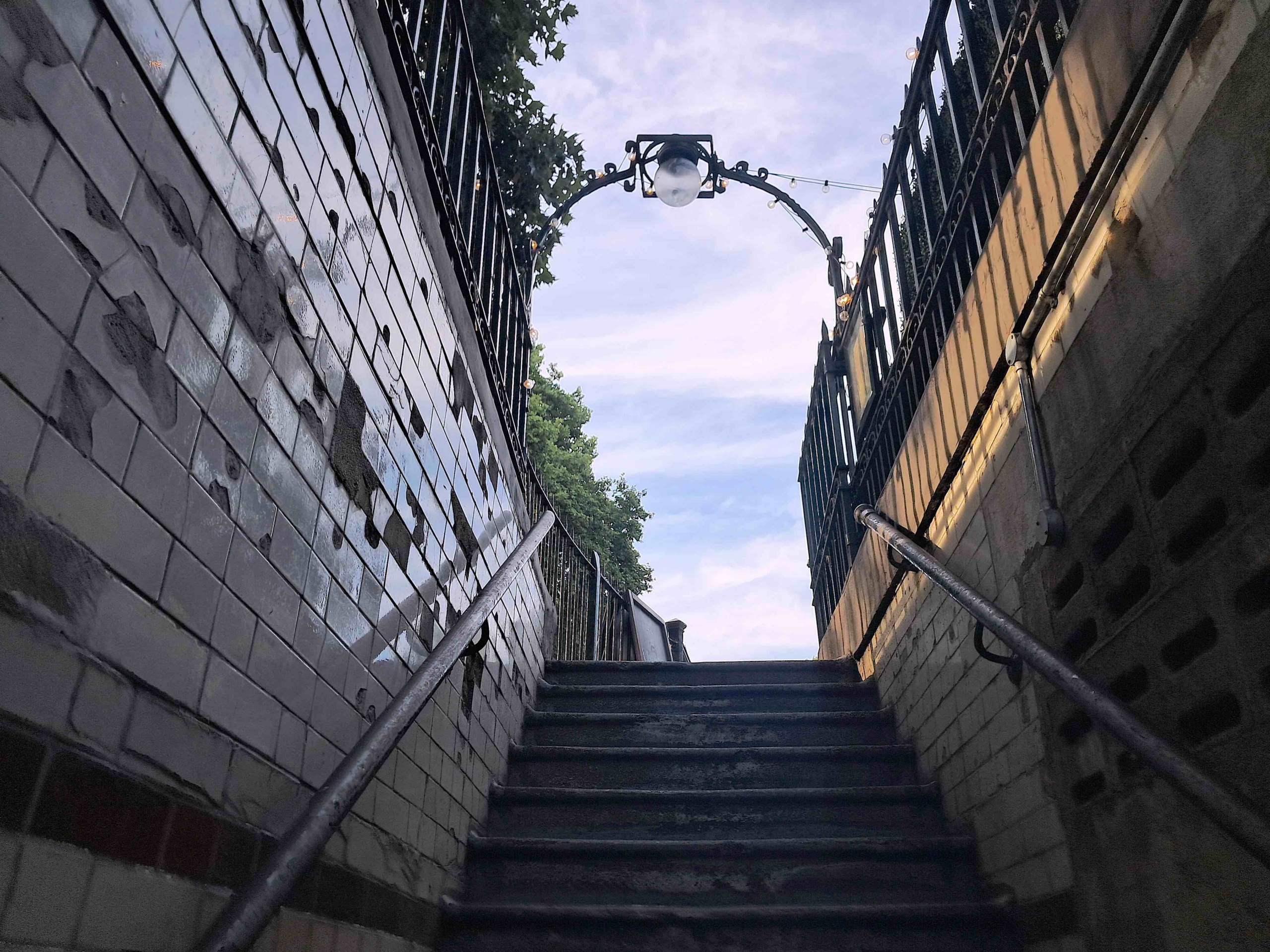
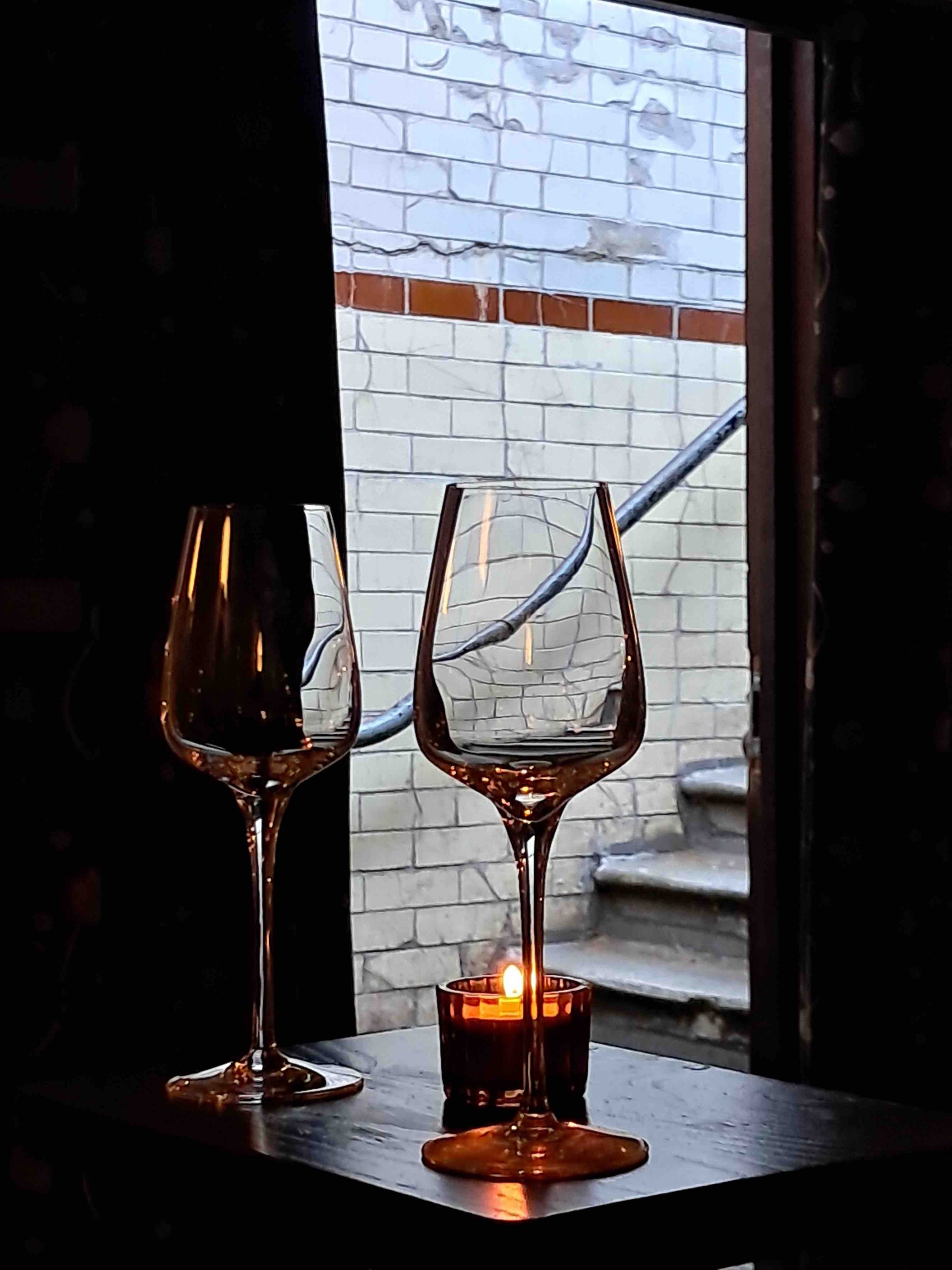
Well I promised myself  no distractions on the way to the stationary shop but is WC Wine & Charcuterie Toilet bar a wine bar or a public lavatory?It’s all in the name, and I can see it’s a converted, repurposed public toilet. It doesn’t look like much from street level; the bar details chalked out on a smiley blackboard. There are stairs leading down and the jazz music wafting up to street level has got me more than a little curious.  Tentative steps down. A cultured selection of fine wines – no beer, draft or bottled –  and the tables and seating are worked along the preserved lavatory tiling walls into private booths. No smell of disinfectant though.

Capital Odyssey: A Flaneur’s Bloomsbury Wanderings  In our busy, buzzing capital city, destination and purpose lie at the heart of every short trip. The butterfly-like flaneur might turn that on its head and float through the  beating heart of our metropolis  wandering aimlessly just for the hell of it. What's a flaneur? An urban wanderer basically. The writings of  20th-century modernist author Virginia Woolf have made the flaneur topical, and fashionable again. In Woolf's essay ‘Street Haunting: A London Adventure’ the narrator leaves her house with one vague purpose - to buy a pencil - this is soon forgotten as she wanders the streets engaging in the off the cuff and happenchance; going with the flow, at one with the stream of urban consciousness and London’s chaotic energy. Every mundane chance counter, every overlooked secondhand book shop, every cul-de sac mews draped in ivy or conversation with a stranger, now a mindful (not necessarily meaningful) experience. Pic of Virginia Woolf Inspired, I put away my digital notebook and editor’s hat and went out looking for my own flaneur pencil, to, similarly, find meaning in non-purpose and engage the sublime magic of London in summertime. So, let’s get the whole pencil buying thing out the way early and head off. Pic of Me Well, actually, no. That’s much too much purpose, way too early. Purposeful pencil-buying might get in the way of my little urban experiment. So, I will leave that to the end….like Virginia Woolf did. OK, why not begin our capital odyssey in Bloomsbury, at Virginia Woolf’s former address at 46 Gordon Square? Woolf was famously a member of the Bloomsbury Group of intellectuals and creatives who put the area on the cultural map - and quite emphatically, because here am I about to  embark on a flaneur’s wanderings around Bloomsbury 105 years later! Pic of Woolfe’s home Virginia Woolfe moved to 46 Gordon Square (now number 50) in 1904. A brown plaque now marks the address. The Bloomsbury Circle of artists and intellectuals used to meet up here every Thursdays to drink coffee, down a few and whiskies and talk culture. In one of her essays she makes it clear that the movement began and was based here at no.46. The immediate area is a leafy and verdant density  of garden squares. Why so many garden squares in Bloomsbury? Very pretty. There’s certainly a noticeable concentration, giving the neighbourhood a tranquil air, just the tonic for deep-thinking intellectuals or the creative spirit. Gordon Square, Tavistock Square, Woburn Square, Torrington Square, cheek by jowl. Pic of Momo Kiosk A slow wander through Gordon Square ….and just by the entrance to this garden square closest to their former home, a coffee kiosk with the look of a magical, creaky cottage from centuries past. Not sure about a coffee or cappuccino in this hot weather but the spread of homemade pastries, cakes, sweets, snacks and sandwiches are too inviting to turn down. Even at this time of the morning, the benches dotted around this tranquil green space are already taken up by book reading, leisurely types suffused somewhat with the Woolfian vibe almost by osmosis. Pic of SOAS Yes, today I am consciously avoiding the big cultural institutions, galleries and museums, the British museum and the like because it's my Flaneur Day, so I do as they do.  SOAS University is just down the road from Gordon Square on Thornhaugh Street and the Emroidery Traditions of Afghanistan exhibition in the SOAS Gallery obviously doesn't count as a biggie.  I stumbled upon this gallery after my coffee in Gordon Square. And discovered another hidden secret - a tranquil Japanese Garden on the gallery's top floor. A welcome sanctuary from the austere architecture of the wider cityscape Yet a nice fit within the peaceful cadence of the garden squares of Bloomsbury. Pic of Japanese Garden I find myself  being drawn in the direction of the British Museum. Not sure why, i am now in this vicinity. I just can’t help myself. But I won't go in, won't spoil my flaneur experiment. Pic of Jarndyce Antiquarian Booksellers And across the road from the British Museum (I didnt go in!) the Jarndyce Antiquarian Booksellers is all Dickensian and Victorian, like a perfectly preserved 19th-century time capsule. There’s no walking past it. Inside there's original Dickensian books and texts, tomes and historic pamphlets. Rich in so many other ways and priced for collectors so in that way too. Pic of Horse Hospital I know of the Horse Hospital (built in 1797) but the magnificent cobbled colonnade leading up to it was what first caught my eye. Never seen it before, Well, perhaps, I had but today I am, of course, more mindful of nuance in the cityscape. This colonnade, laid out by architect James Burton in the 1790s, has echoes of centuries past, when the horse hospital was an actual horse hospital. Today it is an arts centre but the historic horse ramps,  and, indeed the colonnade  remain. Pic of Shelleys House Yes, you can wander through Bloomsbury all day and night but sometimes the effort in staying true to your flaneurial spirit makes you look at the remainder of London through a critical lens.  Charles Dickens Museum, I can't go in there. No it's nothing that he's done, he was never a Darwinist but the Charles Dickens Museum (although small) is a little too big. But Percy and Mary Shelley's former home on 87 Marchmint Street is an interesting find. The house is no longer there, demolished in 1904, but There’s a English Heritage brown plaque barley visible metres up the wall. I don’t get it?? You’ll have a problem reading that from down here. Telescope or binoculars I suppose.  The Shelley’s lived there with Mary Shelley's step-sister Clair Claremont who was carrying Lord Byron’s child. I am not sure if the then landlady Mrs Harbottle was uneasy about the fact the three of them were on the run from a debt collector but she put up with them until 1816 when they left to join Lord Byron in Lake Geneva, Switzerland. Pic of St Georges Garden Opened in 1715, St George’s garden is a historic cemetery-turned public garden and yes, like many others it somehow still holds echoes of its solemn, sorrowful former use and hallowed ground. You’ll find the humble, nondescript grave of Oliver Cromwell’s granddaughter Anna Gibson The Foundling Museum is just round the corner. Established in 1739 as the first children's charity and earliest art gallery it attracted some cultural heavyweights to supports its cause. Artist William Hogarth lent his considerable influence and his paintings hung in the hospital, attracting wealthy patrons who dug deeply to support the hospital. The composer George Friderik Handel was another benefactor. The nearby Handel Street is named after him. And there’s another one of Virginia Woolfe's former address right next to the Museum. She lived here at 38 Brunswick Square (Virginia and her Bloomsbury Squares again) and rented out floors and rooms to their friends, including esteemed economist John Maynard Keyne. The time's a little too close to 5pm for my liking. I need to get to the stationary shop in Russell Street to get my pencil before the shop closes. Pic of winebar Well I promised myself  no distractions on the way to the stationary shop but...is this a wine bar or a public lavatory.  WC Wine & Charcuterie Toilet bar. It doesn't look like much from street level with the bar details chalked out on a blackboard. There's stairs leading down and the music wafting up to street level has got me more than a little curious..  A cultured selection of fine wines - no beer, draft or bottled -  and the tables and seating are worked along the preserved lavatory tiling walls into private booths. No smell of disinfectant though. Pic of stationary shop And finally I arrive at the magical, mysterious Victorian stationers L. Cornellisen & Son, serving artists since 1855. Like one or two other 19th-century shops on Great Russell Street, it’s like your going back in time. This is THE shop where Virginia Woolfe would have bought her pencil.
Capital Odyssey: A Flaneur’s Bloomsbury Wanderings  In our busy, buzzing capital city, destination and purpose lie at the heart of every short trip. The butterfly-like flaneur might turn that on its head and float through the  beating heart of our metropolis  wandering aimlessly just for the hell of it. What's a flaneur? An urban wanderer basically. The writings of  20th-century modernist author Virginia Woolf have made the flaneur topical, and fashionable again. In Woolf's essay ‘Street Haunting: A London Adventure’ the narrator leaves her house with one vague purpose - to buy a pencil - this is soon forgotten as she wanders the streets engaging in the off the cuff and happenchance; going with the flow, at one with the stream of urban consciousness and London’s chaotic energy. Every mundane chance counter, every overlooked secondhand book shop, every cul-de sac mews draped in ivy or conversation with a stranger, now a mindful (not necessarily meaningful) experience. Pic of Virginia Woolf Inspired, I put away my digital notebook and editor’s hat and went out looking for my own flaneur pencil, to, similarly, find meaning in non-purpose and engage the sublime magic of London in summertime. So, let’s get the whole pencil buying thing out the way early and head off. Pic of Me Well, actually, no. That’s much too much purpose, way too early. Purposeful pencil-buying might get in the way of my little urban experiment. So, I will leave that to the end….like Virginia Woolf did. OK, why not begin our capital odyssey in Bloomsbury, at Virginia Woolf’s former address at 46 Gordon Square? Woolf was famously a member of the Bloomsbury Group of intellectuals and creatives who put the area on the cultural map - and quite emphatically, because here am I about to  embark on a flaneur’s wanderings around Bloomsbury 105 years later! Pic of Woolfe’s home Virginia Woolfe moved to 46 Gordon Square (now number 50) in 1904. A brown plaque now marks the address. The Bloomsbury Circle of artists and intellectuals used to meet up here every Thursdays to drink coffee, down a few and whiskies and talk culture. In one of her essays she makes it clear that the movement began and was based here at no.46. The immediate area is a leafy and verdant density  of garden squares. Why so many garden squares in Bloomsbury? Very pretty. There’s certainly a noticeable concentration, giving the neighbourhood a tranquil air, just the tonic for deep-thinking intellectuals or the creative spirit. Gordon Square, Tavistock Square, Woburn Square, Torrington Square, cheek by jowl. Pic of Momo Kiosk A slow wander through Gordon Square ….and just by the entrance to this garden square closest to their former home, a coffee kiosk with the look of a magical, creaky cottage from centuries past. Not sure about a coffee or cappuccino in this hot weather but the spread of homemade pastries, cakes, sweets, snacks and sandwiches are too inviting to turn down. Even at this time of the morning, the benches dotted around this tranquil green space are already taken up by book reading, leisurely types suffused somewhat with the Woolfian vibe almost by osmosis. Pic of SOAS Yes, today I am consciously avoiding the big cultural institutions, galleries and museums, the British museum and the like because it's my Flaneur Day, so I do as they do.  SOAS University is just down the road from Gordon Square on Thornhaugh Street and the Emroidery Traditions of Afghanistan exhibition in the SOAS Gallery obviously doesn't count as a biggie.  I stumbled upon this gallery after my coffee in Gordon Square. And discovered another hidden secret - a tranquil Japanese Garden on the gallery's top floor. A welcome sanctuary from the austere architecture of the wider cityscape Yet a nice fit within the peaceful cadence of the garden squares of Bloomsbury. Pic of Japanese Garden I find myself  being drawn in the direction of the British Museum. Not sure why, i am now in this vicinity. I just can’t help myself. But I won't go in, won't spoil my flaneur experiment. Pic of Jarndyce Antiquarian Booksellers And across the road from the British Museum (I didnt go in!) the Jarndyce Antiquarian Booksellers is all Dickensian and Victorian, like a perfectly preserved 19th-century time capsule. There’s no walking past it. Inside there's original Dickensian books and texts, tomes and historic pamphlets. Rich in so many other ways and priced for collectors so in that way too. Pic of Horse Hospital I know of the Horse Hospital (built in 1797) but the magnificent cobbled colonnade leading up to it was what first caught my eye. Never seen it before, Well, perhaps, I had but today I am, of course, more mindful of nuance in the cityscape. This colonnade, laid out by architect James Burton in the 1790s, has echoes of centuries past, when the horse hospital was an actual horse hospital. Today it is an arts centre but the historic horse ramps,  and, indeed the colonnade  remain. Pic of Shelleys House Yes, you can wander through Bloomsbury all day and night but sometimes the effort in staying true to your flaneurial spirit makes you look at the remainder of London through a critical lens.  Charles Dickens Museum, I can't go in there. No it's nothing that he's done, he was never a Darwinist but the Charles Dickens Museum (although small) is a little too big. But Percy and Mary Shelley's former home on 87 Marchmint Street is an interesting find. The house is no longer there, demolished in 1904, but There’s a English Heritage brown plaque barley visible metres up the wall. I don’t get it?? You’ll have a problem reading that from down here. Telescope or binoculars I suppose.  The Shelley’s lived there with Mary Shelley's step-sister Clair Claremont who was carrying Lord Byron’s child. I am not sure if the then landlady Mrs Harbottle was uneasy about the fact the three of them were on the run from a debt collector but she put up with them until 1816 when they left to join Lord Byron in Lake Geneva, Switzerland. Pic of St Georges Garden Opened in 1715, St George’s garden is a historic cemetery-turned public garden and yes, like many others it somehow still holds echoes of its solemn, sorrowful former use and hallowed ground. You’ll find the humble, nondescript grave of Oliver Cromwell’s granddaughter Anna Gibson The Foundling Museum is just round the corner. Established in 1739 as the first children's charity and earliest art gallery it attracted some cultural heavyweights to supports its cause. Artist William Hogarth lent his considerable influence and his paintings hung in the hospital, attracting wealthy patrons who dug deeply to support the hospital. The composer George Friderik Handel was another benefactor. The nearby Handel Street is named after him. And there’s another one of Virginia Woolfe's former address right next to the Museum. She lived here at 38 Brunswick Square (Virginia and her Bloomsbury Squares again) and rented out floors and rooms to their friends, including esteemed economist John Maynard Keyne. The time's a little too close to 5pm for my liking. I need to get to the stationary shop in Russell Street to get my pencil before the shop closes. Pic of winebar Well I promised myself  no distractions on the way to the stationary shop but...is this a wine bar or a public lavatory.  WC Wine & Charcuterie Toilet bar. It doesn't look like much from street level with the bar details chalked out on a blackboard. There's stairs leading down and the music wafting up to street level has got me more than a little curious..  A cultured selection of fine wines - no beer, draft or bottled -  and the tables and seating are worked along the preserved lavatory tiling walls into private booths. No smell of disinfectant though. Pic of stationary shop And finally I arrive at the magical, mysterious Victorian stationers L. Cornellisen & Son, serving artists since 1855. Like one or two other 19th-century shops on Great Russell Street, it’s like your going back in time. This is THE shop where Virginia Woolfe would have bought her pencil.
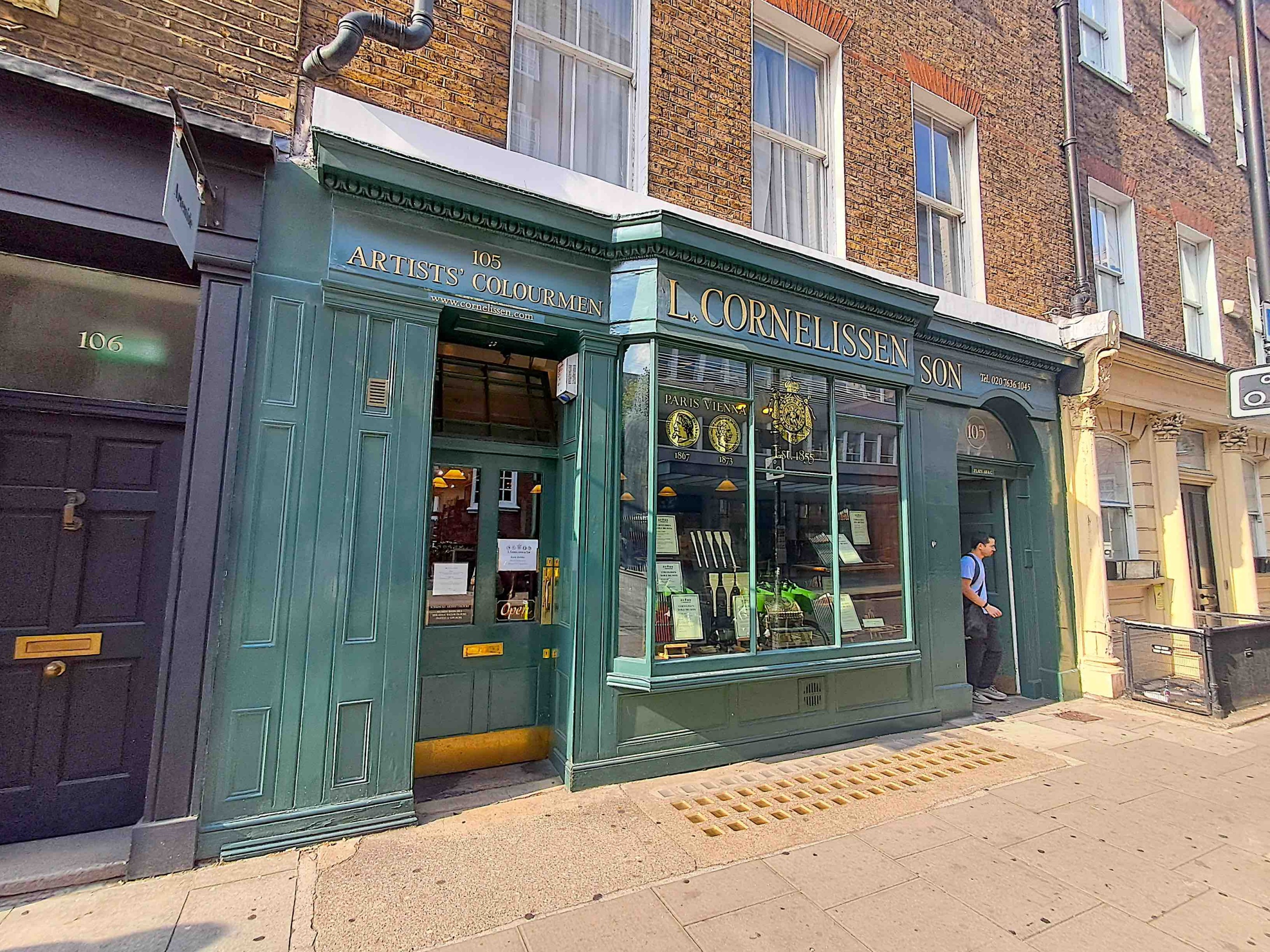
And finally I arrive at the magical, mysterious Victorian stationary shop L. Cornellisen & Son, serving artists since 1855. Like one or two other 19th-century shops on Great Russell Street, it’s like a time machine has whisked you off to another century. This is the shop where Virginia Woolfe might have bought a pencil.

Capital Odyssey: A Flaneur’s Bloomsbury Wanderings  In our busy, buzzing capital city, destination and purpose lie at the heart of every short trip. The butterfly-like flaneur might turn that on its head and float through the  beating heart of our metropolis  wandering aimlessly just for the hell of it. What's a flaneur? An urban wanderer basically. The writings of  20th-century modernist author Virginia Woolf have made the flaneur topical, and fashionable again. In Woolf's essay ‘Street Haunting: A London Adventure’ the narrator leaves her house with one vague purpose - to buy a pencil - this is soon forgotten as she wanders the streets engaging in the off the cuff and happenchance; going with the flow, at one with the stream of urban consciousness and London’s chaotic energy. Every mundane chance counter, every overlooked secondhand book shop, every cul-de sac mews draped in ivy or conversation with a stranger, now a mindful (not necessarily meaningful) experience. Pic of Virginia Woolf Inspired, I put away my digital notebook and editor’s hat and went out looking for my own flaneur pencil, to, similarly, find meaning in non-purpose and engage the sublime magic of London in summertime. So, let’s get the whole pencil buying thing out the way early and head off. Pic of Me Well, actually, no. That’s much too much purpose, way too early. Purposeful pencil-buying might get in the way of my little urban experiment. So, I will leave that to the end….like Virginia Woolf did. OK, why not begin our capital odyssey in Bloomsbury, at Virginia Woolf’s former address at 46 Gordon Square? Woolf was famously a member of the Bloomsbury Group of intellectuals and creatives who put the area on the cultural map - and quite emphatically, because here am I about to  embark on a flaneur’s wanderings around Bloomsbury 105 years later! Pic of Woolfe’s home Virginia Woolfe moved to 46 Gordon Square (now number 50) in 1904. A brown plaque now marks the address. The Bloomsbury Circle of artists and intellectuals used to meet up here every Thursdays to drink coffee, down a few and whiskies and talk culture. In one of her essays she makes it clear that the movement began and was based here at no.46. The immediate area is a leafy and verdant density  of garden squares. Why so many garden squares in Bloomsbury? Very pretty. There’s certainly a noticeable concentration, giving the neighbourhood a tranquil air, just the tonic for deep-thinking intellectuals or the creative spirit. Gordon Square, Tavistock Square, Woburn Square, Torrington Square, cheek by jowl. Pic of Momo Kiosk A slow wander through Gordon Square ….and just by the entrance to this garden square closest to their former home, a coffee kiosk with the look of a magical, creaky cottage from centuries past. Not sure about a coffee or cappuccino in this hot weather but the spread of homemade pastries, cakes, sweets, snacks and sandwiches are too inviting to turn down. Even at this time of the morning, the benches dotted around this tranquil green space are already taken up by book reading, leisurely types suffused somewhat with the Woolfian vibe almost by osmosis. Pic of SOAS Yes, today I am consciously avoiding the big cultural institutions, galleries and museums, the British museum and the like because it's my Flaneur Day, so I do as they do.  SOAS University is just down the road from Gordon Square on Thornhaugh Street and the Emroidery Traditions of Afghanistan exhibition in the SOAS Gallery obviously doesn't count as a biggie.  I stumbled upon this gallery after my coffee in Gordon Square. And discovered another hidden secret - a tranquil Japanese Garden on the gallery's top floor. A welcome sanctuary from the austere architecture of the wider cityscape Yet a nice fit within the peaceful cadence of the garden squares of Bloomsbury. Pic of Japanese Garden I find myself  being drawn in the direction of the British Museum. Not sure why, i am now in this vicinity. I just can’t help myself. But I won't go in, won't spoil my flaneur experiment. Pic of Jarndyce Antiquarian Booksellers And across the road from the British Museum (I didnt go in!) the Jarndyce Antiquarian Booksellers is all Dickensian and Victorian, like a perfectly preserved 19th-century time capsule. There’s no walking past it. Inside there's original Dickensian books and texts, tomes and historic pamphlets. Rich in so many other ways and priced for collectors so in that way too. Pic of Horse Hospital I know of the Horse Hospital (built in 1797) but the magnificent cobbled colonnade leading up to it was what first caught my eye. Never seen it before, Well, perhaps, I had but today I am, of course, more mindful of nuance in the cityscape. This colonnade, laid out by architect James Burton in the 1790s, has echoes of centuries past, when the horse hospital was an actual horse hospital. Today it is an arts centre but the historic horse ramps,  and, indeed the colonnade  remain. Pic of Shelleys House Yes, you can wander through Bloomsbury all day and night but sometimes the effort in staying true to your flaneurial spirit makes you look at the remainder of London through a critical lens.  Charles Dickens Museum, I can't go in there. No it's nothing that he's done, he was never a Darwinist but the Charles Dickens Museum (although small) is a little too big. But Percy and Mary Shelley's former home on 87 Marchmint Street is an interesting find. The house is no longer there, demolished in 1904, but There’s a English Heritage brown plaque barley visible metres up the wall. I don’t get it?? You’ll have a problem reading that from down here. Telescope or binoculars I suppose.  The Shelley’s lived there with Mary Shelley's step-sister Clair Claremont who was carrying Lord Byron’s child. I am not sure if the then landlady Mrs Harbottle was uneasy about the fact the three of them were on the run from a debt collector but she put up with them until 1816 when they left to join Lord Byron in Lake Geneva, Switzerland. Pic of St Georges Garden Opened in 1715, St George’s garden is a historic cemetery-turned public garden and yes, like many others it somehow still holds echoes of its solemn, sorrowful former use and hallowed ground. You’ll find the humble, nondescript grave of Oliver Cromwell’s granddaughter Anna Gibson The Foundling Museum is just round the corner. Established in 1739 as the first children's charity and earliest art gallery it attracted some cultural heavyweights to supports its cause. Artist William Hogarth lent his considerable influence and his paintings hung in the hospital, attracting wealthy patrons who dug deeply to support the hospital. The composer George Friderik Handel was another benefactor. The nearby Handel Street is named after him. And there’s another one of Virginia Woolfe's former address right next to the Museum. She lived here at 38 Brunswick Square (Virginia and her Bloomsbury Squares again) and rented out floors and rooms to their friends, including esteemed economist John Maynard Keyne. The time's a little too close to 5pm for my liking. I need to get to the stationary shop in Russell Street to get my pencil before the shop closes. Pic of winebar Well I promised myself  no distractions on the way to the stationary shop but...is this a wine bar or a public lavatory.  WC Wine & Charcuterie Toilet bar. It doesn't look like much from street level with the bar details chalked out on a blackboard. There's stairs leading down and the music wafting up to street level has got me more than a little curious..  A cultured selection of fine wines - no beer, draft or bottled -  and the tables and seating are worked along the preserved lavatory tiling walls into private booths. No smell of disinfectant though. Pic of stationary shop And finally I arrive at the magical, mysterious Victorian stationers L. Cornellisen & Son, serving artists since 1855. Like one or two other 19th-century shops on Great Russell Street, it’s like your going back in time. This is THE shop where Virginia Woolfe would have bought her pencil.
Capital Odyssey: A Flaneur’s Bloomsbury Wanderings  In our busy, buzzing capital city, destination and purpose lie at the heart of every short trip. The butterfly-like flaneur might turn that on its head and float through the  beating heart of our metropolis  wandering aimlessly just for the hell of it. What's a flaneur? An urban wanderer basically. The writings of  20th-century modernist author Virginia Woolf have made the flaneur topical, and fashionable again. In Woolf's essay ‘Street Haunting: A London Adventure’ the narrator leaves her house with one vague purpose - to buy a pencil - this is soon forgotten as she wanders the streets engaging in the off the cuff and happenchance; going with the flow, at one with the stream of urban consciousness and London’s chaotic energy. Every mundane chance counter, every overlooked secondhand book shop, every cul-de sac mews draped in ivy or conversation with a stranger, now a mindful (not necessarily meaningful) experience. Pic of Virginia Woolf Inspired, I put away my digital notebook and editor’s hat and went out looking for my own flaneur pencil, to, similarly, find meaning in non-purpose and engage the sublime magic of London in summertime. So, let’s get the whole pencil buying thing out the way early and head off. Pic of Me Well, actually, no. That’s much too much purpose, way too early. Purposeful pencil-buying might get in the way of my little urban experiment. So, I will leave that to the end….like Virginia Woolf did. OK, why not begin our capital odyssey in Bloomsbury, at Virginia Woolf’s former address at 46 Gordon Square? Woolf was famously a member of the Bloomsbury Group of intellectuals and creatives who put the area on the cultural map - and quite emphatically, because here am I about to  embark on a flaneur’s wanderings around Bloomsbury 105 years later! Pic of Woolfe’s home Virginia Woolfe moved to 46 Gordon Square (now number 50) in 1904. A brown plaque now marks the address. The Bloomsbury Circle of artists and intellectuals used to meet up here every Thursdays to drink coffee, down a few and whiskies and talk culture. In one of her essays she makes it clear that the movement began and was based here at no.46. The immediate area is a leafy and verdant density  of garden squares. Why so many garden squares in Bloomsbury? Very pretty. There’s certainly a noticeable concentration, giving the neighbourhood a tranquil air, just the tonic for deep-thinking intellectuals or the creative spirit. Gordon Square, Tavistock Square, Woburn Square, Torrington Square, cheek by jowl. Pic of Momo Kiosk A slow wander through Gordon Square ….and just by the entrance to this garden square closest to their former home, a coffee kiosk with the look of a magical, creaky cottage from centuries past. Not sure about a coffee or cappuccino in this hot weather but the spread of homemade pastries, cakes, sweets, snacks and sandwiches are too inviting to turn down. Even at this time of the morning, the benches dotted around this tranquil green space are already taken up by book reading, leisurely types suffused somewhat with the Woolfian vibe almost by osmosis. Pic of SOAS Yes, today I am consciously avoiding the big cultural institutions, galleries and museums, the British museum and the like because it's my Flaneur Day, so I do as they do.  SOAS University is just down the road from Gordon Square on Thornhaugh Street and the Emroidery Traditions of Afghanistan exhibition in the SOAS Gallery obviously doesn't count as a biggie.  I stumbled upon this gallery after my coffee in Gordon Square. And discovered another hidden secret - a tranquil Japanese Garden on the gallery's top floor. A welcome sanctuary from the austere architecture of the wider cityscape Yet a nice fit within the peaceful cadence of the garden squares of Bloomsbury. Pic of Japanese Garden I find myself  being drawn in the direction of the British Museum. Not sure why, i am now in this vicinity. I just can’t help myself. But I won't go in, won't spoil my flaneur experiment. Pic of Jarndyce Antiquarian Booksellers And across the road from the British Museum (I didnt go in!) the Jarndyce Antiquarian Booksellers is all Dickensian and Victorian, like a perfectly preserved 19th-century time capsule. There’s no walking past it. Inside there's original Dickensian books and texts, tomes and historic pamphlets. Rich in so many other ways and priced for collectors so in that way too. Pic of Horse Hospital I know of the Horse Hospital (built in 1797) but the magnificent cobbled colonnade leading up to it was what first caught my eye. Never seen it before, Well, perhaps, I had but today I am, of course, more mindful of nuance in the cityscape. This colonnade, laid out by architect James Burton in the 1790s, has echoes of centuries past, when the horse hospital was an actual horse hospital. Today it is an arts centre but the historic horse ramps,  and, indeed the colonnade  remain. Pic of Shelleys House Yes, you can wander through Bloomsbury all day and night but sometimes the effort in staying true to your flaneurial spirit makes you look at the remainder of London through a critical lens.  Charles Dickens Museum, I can't go in there. No it's nothing that he's done, he was never a Darwinist but the Charles Dickens Museum (although small) is a little too big. But Percy and Mary Shelley's former home on 87 Marchmint Street is an interesting find. The house is no longer there, demolished in 1904, but There’s a English Heritage brown plaque barley visible metres up the wall. I don’t get it?? You’ll have a problem reading that from down here. Telescope or binoculars I suppose.  The Shelley’s lived there with Mary Shelley's step-sister Clair Claremont who was carrying Lord Byron’s child. I am not sure if the then landlady Mrs Harbottle was uneasy about the fact the three of them were on the run from a debt collector but she put up with them until 1816 when they left to join Lord Byron in Lake Geneva, Switzerland. Pic of St Georges Garden Opened in 1715, St George’s garden is a historic cemetery-turned public garden and yes, like many others it somehow still holds echoes of its solemn, sorrowful former use and hallowed ground. You’ll find the humble, nondescript grave of Oliver Cromwell’s granddaughter Anna Gibson The Foundling Museum is just round the corner. Established in 1739 as the first children's charity and earliest art gallery it attracted some cultural heavyweights to supports its cause. Artist William Hogarth lent his considerable influence and his paintings hung in the hospital, attracting wealthy patrons who dug deeply to support the hospital. The composer George Friderik Handel was another benefactor. The nearby Handel Street is named after him. And there’s another one of Virginia Woolfe's former address right next to the Museum. She lived here at 38 Brunswick Square (Virginia and her Bloomsbury Squares again) and rented out floors and rooms to their friends, including esteemed economist John Maynard Keyne. The time's a little too close to 5pm for my liking. I need to get to the stationary shop in Russell Street to get my pencil before the shop closes. Pic of winebar

Facebook Comments

About the author /


Eddie Saint-Jean is a London writer and editor whose editorials cover arts, culture, entertainment, food/drink, local history and heritage.

Related Articles