Where Do We Come From? What Are We? Where Are We Going?
How Gauguin’s visit to London in 1885 helped clear up an existential crisis
140 years ago, French artist Paul Gauguin set off on a get-away-from-it-all visit to London. This visit marked a watershed moment in his life – he had split from his wife and five children and was left alone to ponder the meaning of life. The financially successful Parisien stockbroker had lost it all in the 1882 stock market crash and now sought to make his living as a painter – quite a switch. The amateur painter worked on his canvases on the weekends or in his spare time and had not been to art school; his regular art gallery visits served as his art school. So, one can imagine the heated arguments in the Gauguin household over this sudden career change.
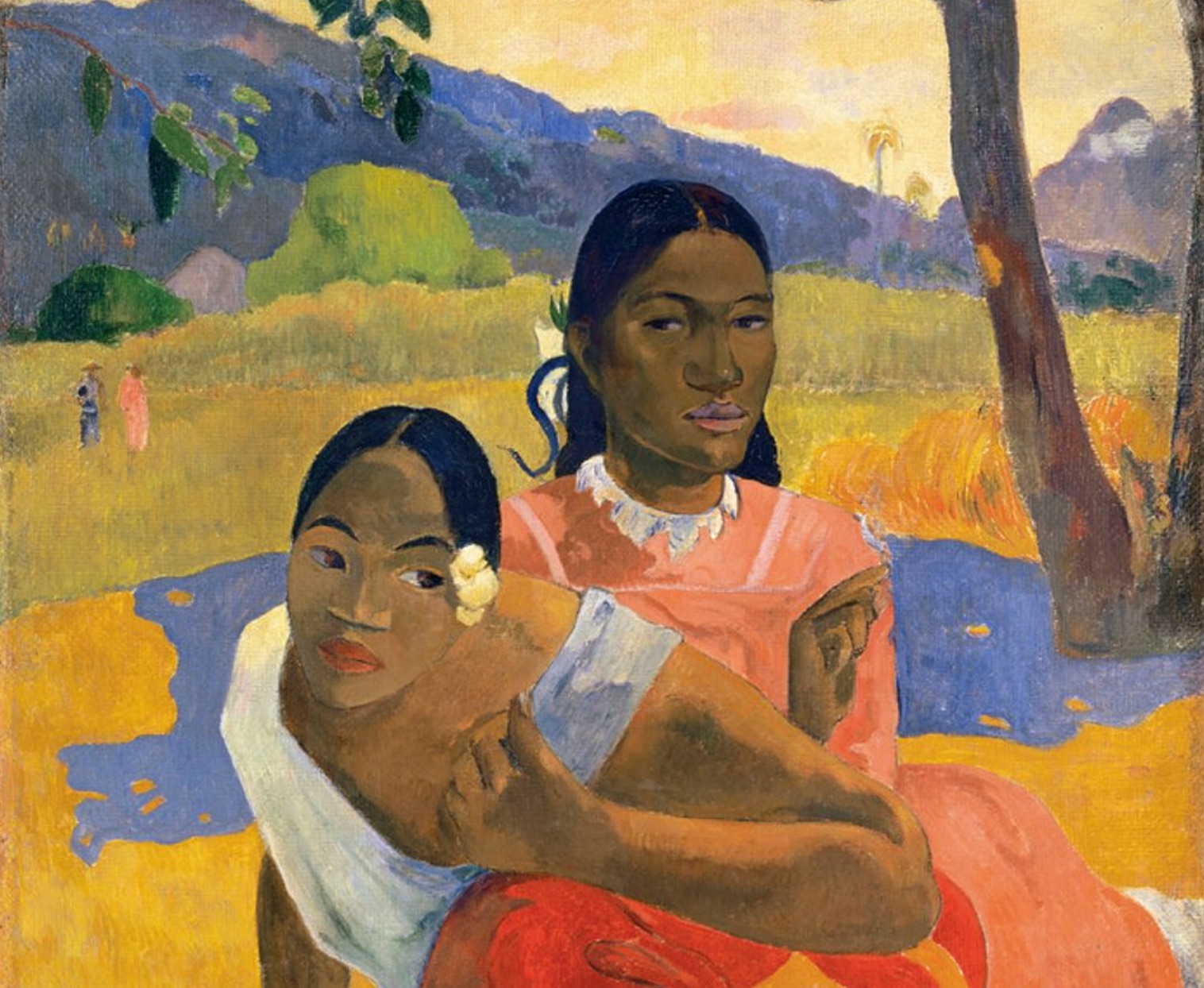
When Will You Marry? [1892]
As the crisis deepened, his wife left him in 1884 and returned to her home city of Copenhagen. Gauguin later joined her but this was just a brief reunion and the beginning of the end. Increasingly industrialised cities like Paris and Copenhagen no longer appealed to him; he sought wilder, more exotic horizons and transformation in many areas of his life. There can be no doubt that 19th-century societal, scientific and technological developments had fueled this desire for a more rustic life. Indeed, at this time he may well have asked himself: “Where Do We Come From? What Are We? Where Are We Going?” That same year he left his family in Copenhagen, a quantum physicist called Niels Bohr was born in the city and would answer many of these ontological questions. Perhaps, not in the way Gauguin had hoped.
London
So 1885 was the crux year: the final split from his wife and, yes, that visit to London. His travels to the tropical paradises of the South Seas and the Caribbean are well documented but his cultural stop-offs at the likes of Kew Gardens and the British Museum offer fascinating insights into the timeline before his big move to Tahiti. At Kew, he was most intrigued by a Corpse Flower from the Rafflesia genus that gives off a revolting smell of rotting flesh to attract fly pollinators. Also, he headed for the British Museum and was particularly taken with the Parthenon Marbles. Since it had been acquired by the museum in 1801, artists, poets and writers from all over the world drew inspiration from its timeless beauty and classical history. It’s said he used a plaster copy of one of the horse head marbles for his 1886 work Still Life With Horse’s Head. The brushwork brings to mind the Impressionist style of his mentor Pissaro, but as you will soon see, his move to the South Seas brought transformation and evolution in his application of colour, form and composition. This new approach would mark him out as a Great Artist – even though he was not widely recognised in his lifetime.
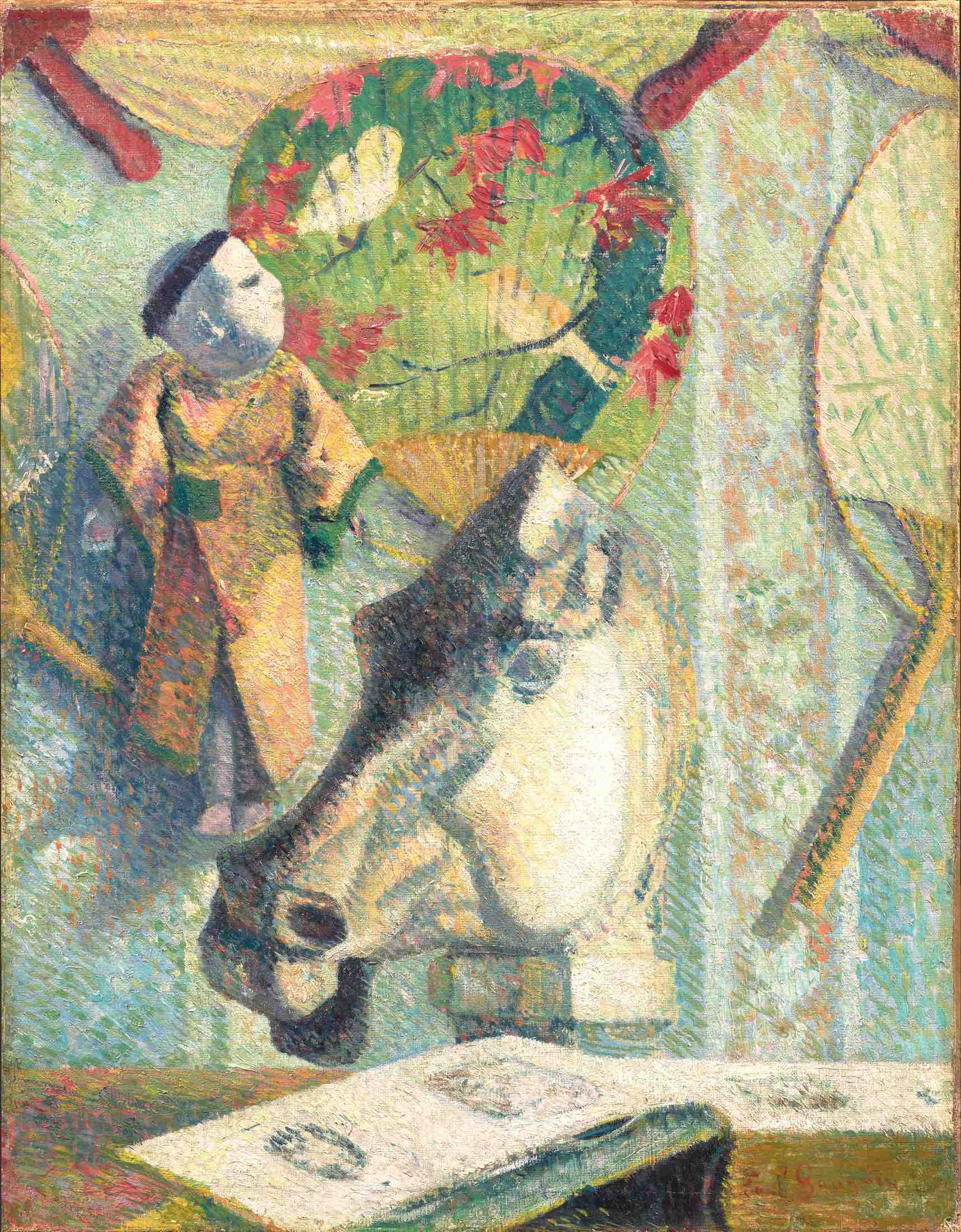
Paul Gauguin, Still Life With Horses Head, 1886
The South Seas
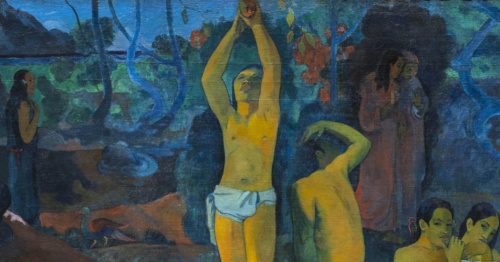
After Gauguin’s London visit, he spent a few years soul-searching before embarking on his new life in Tahiti. This period of deep reflection and search for spiritual meaning in Polynesia was expressed in his largest work Where Do We Come From? What Are We? Where Are We Going? completed in 1897. Here his trademark bold use of colour, saw vibrant golds and blues equivocally grounded in the earthier underlays which became his signature. And that woman picking the apple…Eve in the Garden of Eden? Interestingly, Newtonian physics and George Berkeley’s immaterialism philosophy – which found no material world existing outside of the mind – also made use of the apple symbol to simplify complex ideas. Science and philosophy debating the Big Question, in pithy form. Gauguin knew better than to join the argument. Questions better served his purpose. Several of his works posed questions in their titles.
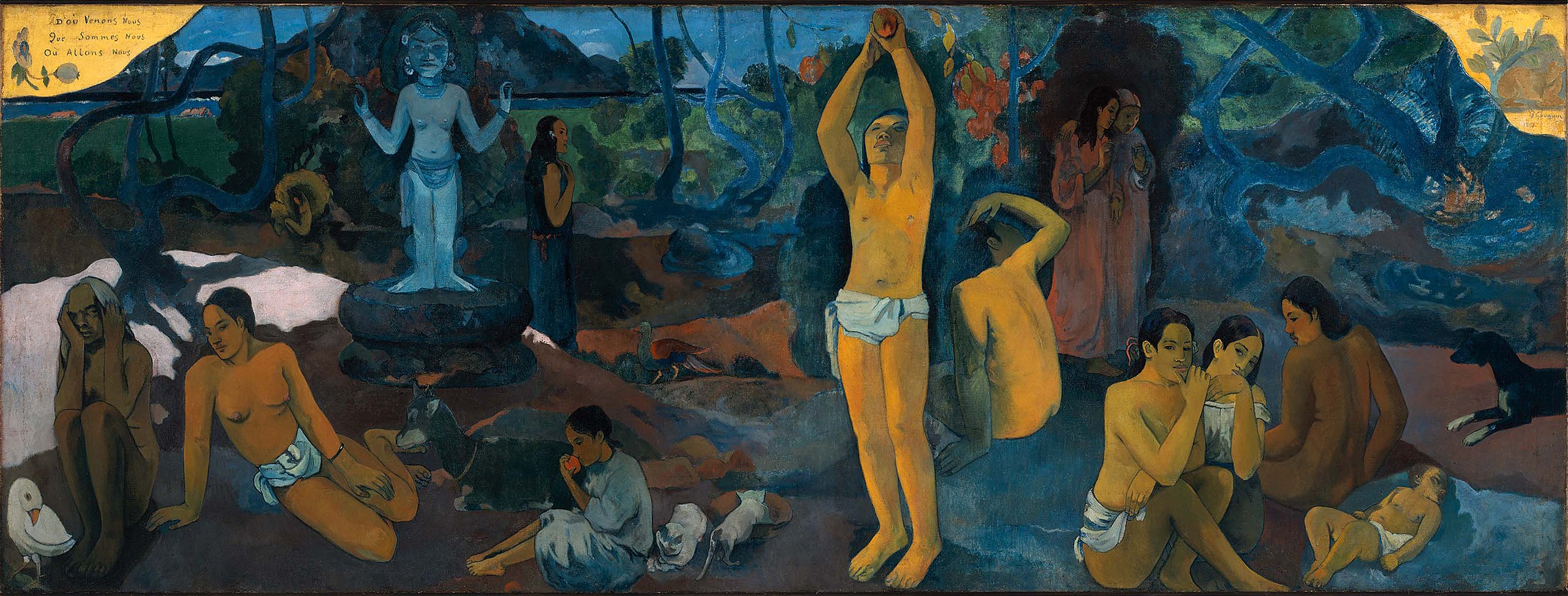
Where Do We Come From? What Are We? Where Are We Going? [1897]
19th-century urbanisation, industrialisation and technological development may have soured his love of Paris, but science was beginning to piece together answers to the questions asked in this masterful work. However, he looked for those answers in religion, philosophy and even mythology. The painting was completed concurrent with discoveries of the photo-electric effect in physics which would lay the ground for quantum physics. Three years before Gauguin’s death in 1903 scientist Max Planck, regarded as the Grandfather of Quantum Physics, reported groundbreaking experiments in quantum mechanics, which would open up questions about whether we exist at all. It’s interesting that these answers drawn from the scientific community surfaced most vociferously in Gauguin’s timeline.
The artist’s tranquil canvases bear the markings of a resolutely personal mythology informed from the confluences and contradictions of his mixed French and Peruvian heritage, Polynesian and Parisian lifestyles, Catholic upbringing, and later anti-clerical stance. The painting looks up at the skies at a God, Catholic or otherwise and asks it these questions. Hard science and free-flowing art answered together. Actually, science got a little free flowing and ‘unmechanical’ with the emergence of the interestingly named quantum mechanics.There’s a famous quote attributed to Planck, that states: “There is no Matter. All matter originates only by virtue of a force which brings the particles of an atom to vibration. We must assume behind this force the existence of a conscious and intelligent Mind. This Mind is the matrix of all matter.” Planck seems to refer to the existence of a God, or certainly a higher intelligence. A convergence of religion and science that Gauguin would not have foreseen when he pondered our existence in this great work.